Article published in Hit Parader, October 1967
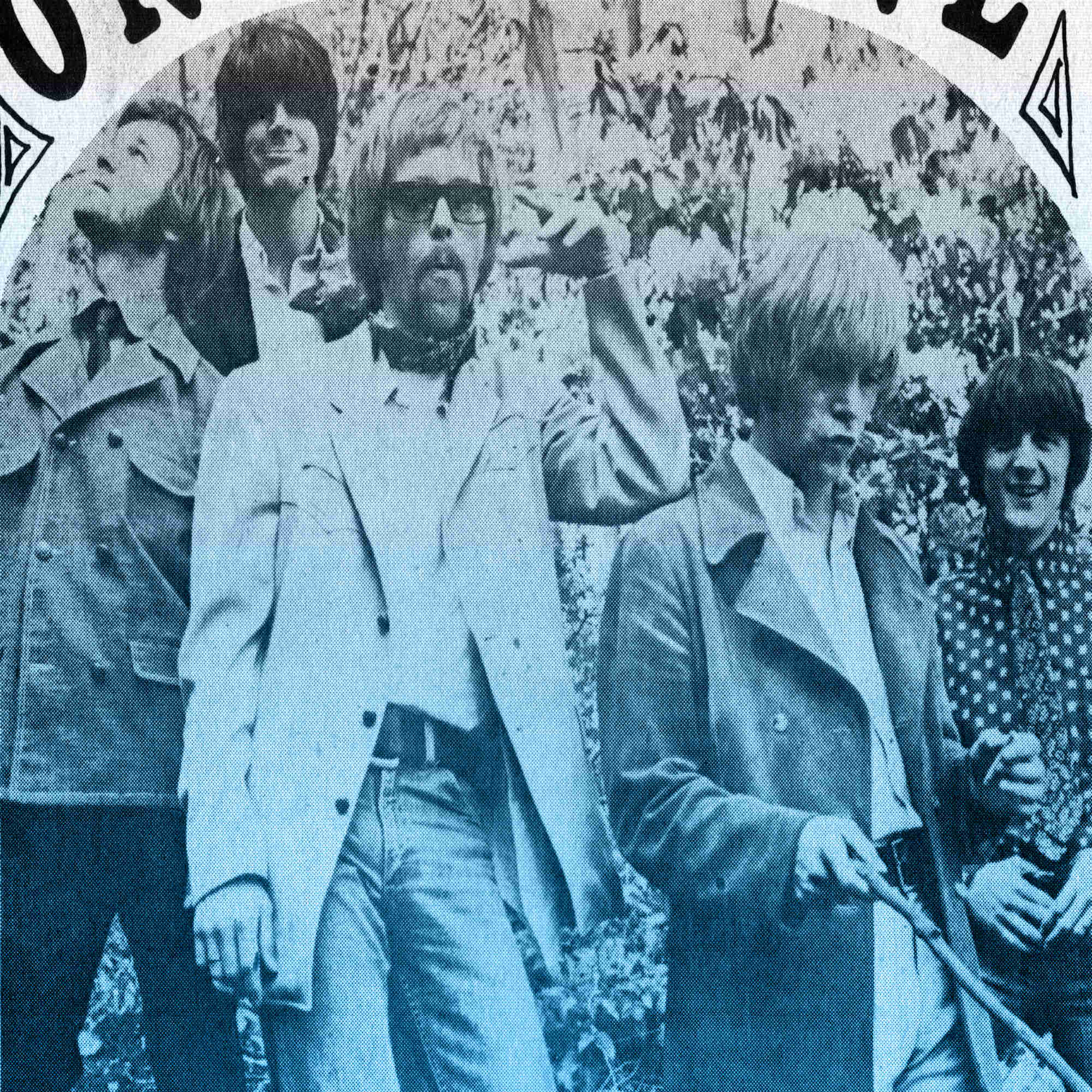
Moby Grape | One By One | PETER LEWIS made up his mind to devote his full interests to music the instant before he crash-landed a commercial Lear jet into Santa Monica Airport. An investigation into the cause of the crash later showed that the plane’s maintenance crew had falsified a report stating that both jet engines had been given a 100,000-hour overhaul, which explained at least one of the reasons why the left engine conked out seconds after take off. None of the passengers was seriously injured, but the plane’s tail was sheared off when it came in on a runway too short for a single-engine landing.
It wasn’t that Peter felt blame for what happened at all. The incident merely served to crystallize his thinking. His decision, obviously, was the right one.
Born in Los Angeles, July 15, 1945, Peter was raised in a wealthy show-business atmosphere. He spent his childhood in Los Angeles, the Virgin Islands and New York, graduating from Loyola High School of Los Angeles. His musical education began with piano lessons, which he took for four years. Later, he studied the guitar with the noted instructor Sam Saxe. He is proficient in playing guitar, banjo, mandolin, piano and steel guitar.
A well-spoken and intense but carefree young man, Peter feels that he has truly found himself in music. “The commercial pilot bit was just one of many things I tried,” he says. “But all of them either failed me or I failed them.”
When he returned to music, he settled on the guitar. “I love the sound of the guitar,” he says. “I love the way it responds when I touch it. When I’m playing the guitar, it becomes an extension of me.”

Moby Grape | One By One
After performing initially as a single folk artist, he formed his own group – Peter and The Wolves – and played discotheques and dance halls up and down the California coast for about a year. “We were pretty terrible,” he recalls, “but it was good experience.”
After dissolving Peter and The Wolves, he took six months off and concentrated on songwriting. Then, anxious to get to work again, he called Bob Mosley, whom he had never met, but whose reputation he knew, and persuaded Bob to join him in establishing a group. Meeting in Los Angeles and comparing ideas and material, Peter and Bob decided to go to San Francisco, where both knew other available musicians.
On their arrival in San Francisco, they called Jerry Miller and Don Stevenson, who agreed to join forces with them, and four-fifths of Moby Grape was set. Skip Spence was added shortly thereafter.
The first Moby Grape album on Columbia contains two songs written by Peter – “Sitting by the Window” and “Fall On You.” His musical tastes are very broad, but he enjoys “any music that is truthful. Music with no meaning is worthless,” he says. Peter is 6′ 2″ tall, weighs 170 pounds and has brown hair and blue eyes.
JERRY MILLER, whose distinctive musicianship has earned him recognition as one of this country’s three or four finest lead-guitar artists, is never satisfied with his performances and is always striving for perfection – that groove of certain excitement that is “a combination of total involvement, soul, emotion, professionalism, and tasty participation with the other guys in the Grape.”
Born in Tacoma, Washington, July 10, 1945, Jerry was raised in a musical atmosphere. His grandfather, an immigrant millworker, had been a concert violinist in his native Sweden. His grandmother had been a “rinky-tink” pianist in movie houses in the days of silent films and tried unsuccessfully to give Jerry piano lessons.
He was motivated through contact with them, however, as well as by his parents, both musicians; and with their help and his own initiative, he developed an unusual piano style. Later, he became interested in the guitar and learned its fundamentals, eventually taking lessons from various instructors in Tacoma.
Much later, he was able to take a course in the sitar from Ali Akbar Khan at a seminar held by the University of California in Berkeley.

Moby Grape | One By One
Jerry made his professional debut with a group thrown together at the last minute for a Douglas Fir Plywood Company employee dance in Tacoma. He remembers that the entire group used one single $25 amplifier. Despite this strange beginning, Jerry went on to play with several local bands in various styles – jazz, rhythm and blues, blues, and rock – until he joined The Frantics and with them, headed for California. Drummer Don Stevenson was also with The Frantics, a popular and influential West Coast group.
In Redwood City some time later, in need of a bass player, the group hired Bob Mosley, Moby Grape’s bassist. After working Northern California discotheques and lounges for some time, The Frantics split up, Jerry and Don forming another group called Marsh Gas, and Bob going into relative hiding as a single folk singer in Gilroy, California.
A few months later, Bob, who had joined with Peter Lewis in an effort to form a group, persuaded Jerry and Don to join an alliance which became Moby Grape.
Jerry is one of the Grape’s most prolific writers, and the first album contains five of the songs Jerry co-authored with Don: “8:05,” “Hey Grandma,” “Ain’t No Use,” “Someday” and “Changes.”
Among other guitarists he admires are Albert King, Gabor Szabo, Wes Montgomery, Django Reinhardt and Howard Roberts. He enjoys the work of composer Charles Ives and the John Lennon-Paul McCartney team.
His twin ambitions are to know himself completely, an ambition which he says being a part of the Grape has helped to further, and to own a rock club, which he would use to give great musicians a chance to say what they want to say without commercial restrictions. Jerry is 5′ 10″ tall, weighs 150 pounds and has hazel eyes and light-brown hair.
Moby Grape | One By One
BOB MOSLEY could, if it ever came to a vote, be picked as the best bass player in pop music. And he is also a fine guitarist, not to mention one of Moby Grape’s five writers. Three of Bob’s songs are included in the Grape’s first album – “Lazy Me,” “Come in the Morn-ing” and “Mister Blues.”
A few years ago, Bob was interested only in sports, especially baseball. At high school, he was a three-sport letterman, and in the summertime, he was a dedicated surfer. It was during his second year at San Diego State that he discovered the guitar, and sports soon took a second chair to Bob’s music. “I was pretty frustrated up until I found the guitar,” says Bob. “I found that it was a groovy way to spill my insides out.”
Bob was born in Paradise Valley, California, a small town outside San Diego, on December 4, 1942. Blond and blue-eyed, he still has the look of the Southern California surfer.
As soon as he had “mastered” the guitar, he began to experiment with a group at school. “Our first gig was for a fraternity dance after we had been together for about three days,” Bob recalls. “We were all sort of half-baked musicians, and none of us had even played in a group before, never mind this group. But we told the fraternity guys that we were ready, and they hired us. We were great. They gave us a $50 bonus for playing so well.”
Later, he became a professional musician and played with several West Coast groups. Jerry Miller and Don Stevenson persuaded him to join The Frantics, a group which Jerry and Don were leading on a tour, when the three met in Redwood City, California. Bob stayed with The Frantics until its breakup early in the summer of 1966.
He was, at this point in his career, tired of the hassle of moving from place to place and never having enough time to concentrate on musical creativity. On a trip south from San Francisco to San Diego, he stopped to visit a friend in Gilroy, California, wound up staying, and performed for weeks in a coffee-house as a single folk singer. “The money was nice, the steady work was nice, and I had a lot of nice time to concentrate on writing,” he remembers.
But then Bob got a phone call from Peter Lewis, who talked him into going to Los Angeles to discuss forming a group. After comparing notes and looking futilely for other interested parties on the Los Angeles scene, Bob and Peter headed for San Francisco, where both knew excellent musicians were available.
Almost as soon as they arrived in San Francisco, Bob called Don and Jerry – the two ex-Frantics – who very much liked the idea of joining Peter and Bob to form a group, and Moby Grape was on its way to being established.
An excellent singer of almost any type of material, Bob enjoys the singing of other artists such as The Beatles, Jimmy Reed, Mahalia Jackson, The Staple Singers, Nina Simone and Aretha Franklin. He thinks the best instrumentalists to be found are those in Moby Grape. His musical preferences are “anything I can feel; jazz because of its freedom, classical because it’s into it.”
Bob has a great love for performing and relishes the feeling he has after the Grape puts on a good show. And he has a great love for people, especially children, and would some day like to be able to help other people in some way. He is optimistic by nature and a moving force in any situation. Bob is 5′ 10″ tall, weighs 164 pounds and has blue eyes and blond hair.

Moby Grape | One By One
SKIP SPENCE, rhythm guitarist for Moby Grape, bass and piano player for his own amusement, played drums for a year with the, noted Jefferson Airplane. It was a desire to return to performing with his guitar that led him to leave The Airplane and join Moby Grape.
In addition to this facility with instruments, Skip is also an outstanding writer. Moby Grape’s first Columbia album contains two of Skip’s songs – “Omaha” and “Indifference.” While he was with The Jefferson Airplane, he penned “My Best Friend” and, with Marty Balin, co-authored “Don’t Slip Away” and “Blues for an Airplane.”
Born in Windsor, Ontario, April 18, 1946, Skip was raised “all over North America.” His father was a salesman and a talented pianist.
“Even though we moved around a lot,” recalls Skip, “there was always music in our home. As long as I can remember, my whole life has been music.”
He left home at 16 to pursue a career as a professional musician, and after knocking around for a while, became half of a very successful San Francisco-area duo – David and Michael Aarons. The Aarons performed folk-rock in numerous Northern California clubs for two years before the other half of the duo, Bill Andrus, decided to devote his full time to writing. He is now a promising San Francis-co author. Shortly after the retirement of the Aarons, Skip joined The Jefferson Airplane and was with the group until late summer of 1966.
His most exciting professional experience, says Skip, was the night Moby Grape played San Francisco’s Winterland with The Byrds and played better than they ever had before. And that night, after closing, all of the Grape’s instruments were stolen from the ballroom.
His favourite things include counselors, surprises, miracles, faith, the colour green, and jade. “My favourite critical review came from a daisy-throwing, 14-year-old girl who said, ‘You’re beautiful’.”
Skip is an exponent of macrobiotics and eats only food allowed by his strict macrobiotic diet. Of his philosophy, he says: “My life is me. I’ve always been responsible for myself; I enjoy what I’m doing whenever I’m doing it, and I like doing a little of everything, as long as I’m instantly creating. My real goal in life is to perform at my optimum.”
Skip is 5′ 11″ tall, weighs “heavy” and has blue-green eyes and light-brown hair.

Moby Grape | One By One
DON STEVENSON Just because Don Stevenson is Moby Grape’s drummer, and one of the best drummers in rock, he is not excluded from the more musical side of the group. Not only is he one of the Grape’s five lead singers, but he is one of its five writers. Working with Jerry Miller, Don composed “8:05,” “Hey Grandma,” “Ain’t No Use,” “Someday” and “Changes,” all included in Moby Grape’s first Columbia album.
Don grew up in the Northwest. Born in Seattle, Washington, October 15, 1945, he initially got involved in music through participation in his school choir. Later he took drum lessons, and even later than that, picked up guitar. He also plays “a little koto.”
But Don’s biggest ambition was to travel, and after graduating from Seattle’s Lincoln High School in 1962, he set out on a world hitch-hiking tour. For more than a year he travelled, working when necessary to raise the fare to get to his next destination. The trip took him to the Far East, Africa and Europe.
Returning to Seattle, Don decided to commit himself entirely to music. With friends, he formed a group – The Playboys – and worked discotheques in and around the North-west. He met Jerry Miller, lead guitarist with Moby Grape, when he later joined another group called The Frantics, a Seattle quartet.
Almost immediately, the pair found their musical ideas compatible and began writing songs as The Frantics toured Northwest cities and then moved south to California.
After almost a year working Northern California clubs and dance halls (Bob Mosley joined the group as bassist during this time), The Frantics broke up. Don and Jerry formed a group called Marsh Gas, which lasted until Bob, who had spent the intervening time as a folk singer, reappeared with Peter Lewis, and the four became the founders of Moby Grape.
Don worked with many kinds of performers and many types of music before Moby Grape was formed. In addition to his work with rock bands, he performed with Jack Roberts and The Evergreen Drifters, a country group; Willie Mae “Big Mama” Thornton, blues singer; and several rhythm-and-blues artists.
His favourite singers include performers in several areas of music, but he especially digs Paul McCartney. Composers he favours are Bob Dylan, Charles Lloyd, John Handy, Lennon-McCartney, Bob Mosley, Jerry Williams, Peter Lewis and Skip Spence. Instrumentalists he admires are Grant Green and Roland Kirk.
Don is 5′ 10″ tall, weighs 145 pounds and has brown hair and blue eyes.


Leave a Reply