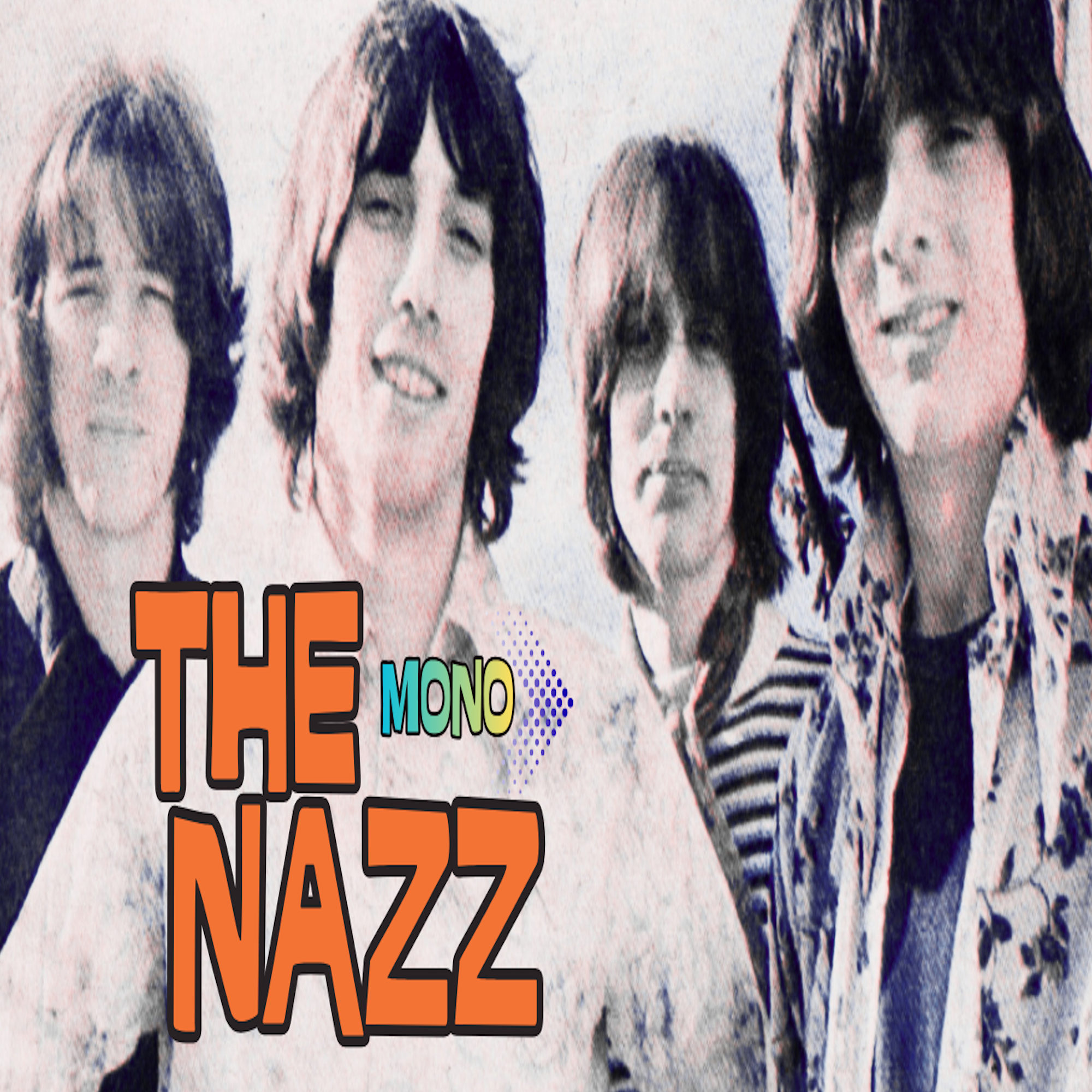
Rock N’ Roll new term for last year’s mistakes
The Nazz Visit Britain, 1968 | STEWKEY Antoni, Todd Rundgren, Carson Van Osten and Thom Mooney, the four members of Nazz — incidentally, a word discovered by the group while trying to hurl the zaniest possible names at each other —have arrived in London to promote their new single “Open My Eyes” and LP “Nazz“. While they are here they will be recording their new LP’. Eighty per cent of the numbers are written and composed by Todd Rundgren, including “Under the Ice” and “Christopher Columbus”.
I asked Nazz why they had come to London to record, when many British groups praise American recording studios: “Although the studios in America are probably better,” explained Stewkey. “the producers here are generally younger and the engineering techniques are newer. Also a lot of good British groups come to America and the audiences accept them as being good. When you return from Britain people will listen to you.”
“We wanted to get out of our country to record, away from things,” added Todd. “And we feel we can get the sound we want here.”

The Nazz Visit Britain, 1968
I was interested to know how Nazz would describe their musical style, which has been adopted by the west coast as “underground” and generally described as rock’n’roll.
“Rock and roll in the States” said Thom, “is a new term to cover up for last year’s mistakes. People don’t want to be associated with what they were doing and so they say it’s now rock ‘n’ roll. At our live performances we play “hard” music, Who and Small Faces type. We do some Instrumentals, but we haven’t recorded any.”
“We played an open air concert recently,” continued Stewkey. “It was very good, but our equipment developed a fault and Thom had to play a fifteen minute drum solo — while Carson did a little dance! We’ve done some jamming as well with people like B. B. King, Paul Butterfield, John Entwhistle and Al Kooper.”
“We haven’t played a lot of dates yet,” added Thom. “as our management didn’t want us to be over-exposed. This meant we didn’t overplay ourselves. But we lost a lot of stage technique which we had to find again.
“We may be making a film in January. We’ll have lines that are more than five words long.”
“We want to play proper parts,” said Todd, “not a typical group film. It can be a great audio-visual experience.” It’s another creative talent that you can use”, added Stewkey.
Conventional clothes
I noticed that Nazz were dressed in highly conventional clothes — ranging from velvet trousers. satin and chiffon shirts and a large pink felt hat! —considering that they are American.
“In America people still look on us as “freaks” said Stewkey, “and they stare at you. When I was in the King’s Road yesterday, I asked an elderly man for directions and he spent five minutes explaining them to me. An American would say ‘I don’t want to get involved, go away’, or he’d send you the wrong way!”
“Older people in America are frightened of what the young are trying to do,” added Carson.
“The 45-60 age group have all the financial power now.”
Nazz. were obviously impressed with the good treatment they have received here and are keen to tour around London, particularly the boutiques. When I left, however, a rather “ailing” Carson was desperately trying to call a taxi — a rather hard task at 5.30 in the afternoon. After being pushed aside by another would-be “fare” he walked away, unhappily muttering “Hands across the sea . . . ” (Record Mirror, 09/11/68)

Nazz Seeking Lasting Success
SSITTING In their rented Kensington house, watching the Nazz rubbing assorted chocolate biscuits in each other’s faces, I was reminded of the Monkees In their early days of fame. The group—Stewkey (organ, lead vocals), Todd Rundgren (guitar), Carson G. Van Osten (bass), and Thom Mooney (drums), are in Britain to promote their first single, “Open My Eyes”, which does not remind me of early Monkees, and to record an I.P.
“We are looking forward to working In English studios with English engineers,” Carson told me. “I think their approach is more professional. They seam to want to get along with the groups, whereas in America, most of them don’t give a damn.”
Nazz made their concert debut with the Doors in July last year at the Philadelphia Town Hall, almost six months after they were formed.
“We saw a lot of groups come up quickly and vanish just as fast,” said Todd. “Mainly it was because they went out on the road too early, without even working out an act.
“We virtually hid ourselves in a large house we had in New York, where we converted a cellar into a rehearsal room and worked non stop on new sounds and songs. “We’d rather have lasting success later than instant success now.” (Top Pops, 09/11/68)

MUSICIANS’ UNION BANS NAZZ DISC SESSION
THE NAZZ, who arrived in London from America last week, have been stopped by the Musicians’ Union from recording an LP during their month long visit to Britain.
Mr. Harry Francis, secretary of the M.U., said in a letter to Frank Fenter, head of Atlantic Records in Britain, “The Foreign Labour Division of the Department of Employment and Productivity has advised that when an application was made to them for a work permit for the group, they were merely described as a vocal group who would be accompanied by British musicians.
“In fact, like all other groups of a similar kind they are instrumentalists (three guitarists and a drummer) who also sing, and were granted a work permit only because the department was misinformed by the applicants.”
The Nazz, incidentally, comprise lead guitar, bass guitar, organ and drums.
Asked by TOP POPS what difference the terms ‘vocal’ and ‘instrumental’ made, Mr. Francis replied, “If we had known that the Nazz accompanied themselves, we would not have recommended that they be given a permit in the first place.
“There is a very strong agreement, concerning exchanges between American and British groups, with our American counterparts.
“We can’t allow anything to undermine this.
“I have been told that the Nazz were planning to use British musicians in the studio, but those musicians will get other work anyway.
“The fact is, we just cannot allow the exchange agreement to be broken.”
TV shows
The letter went on, “This letter therefore is to advise you that unless plans to record the Nazz are immediately cancelled, we shall remove your company’s name from our “fair” list and instruct our members that they may accept no further engagements to record for Polydor Records or for any other marks it represents.
“No, it’s not blackmail,” Mr, Francis said. “If the Nazz went ahead and recorded, that would be the only course left open to us?’
John Kurland, the group’s manager, told Top Pops, “We are very disappointed. But after giving the matter a lot of thought, we decided we couldn’t put Polydor — who release Atlantic In Britain — on a spot.
“And apart from that, the union could have had us blacklisted in America for a year, which would have put the Nazz out of business.
“The boys themselves arc enjoying their visit, even if they can’t record, At the moment we are trying to get another permit which would enable us to appear on a couple of TV shows.” (Top Pops, 09/11/68)


Leave a Reply