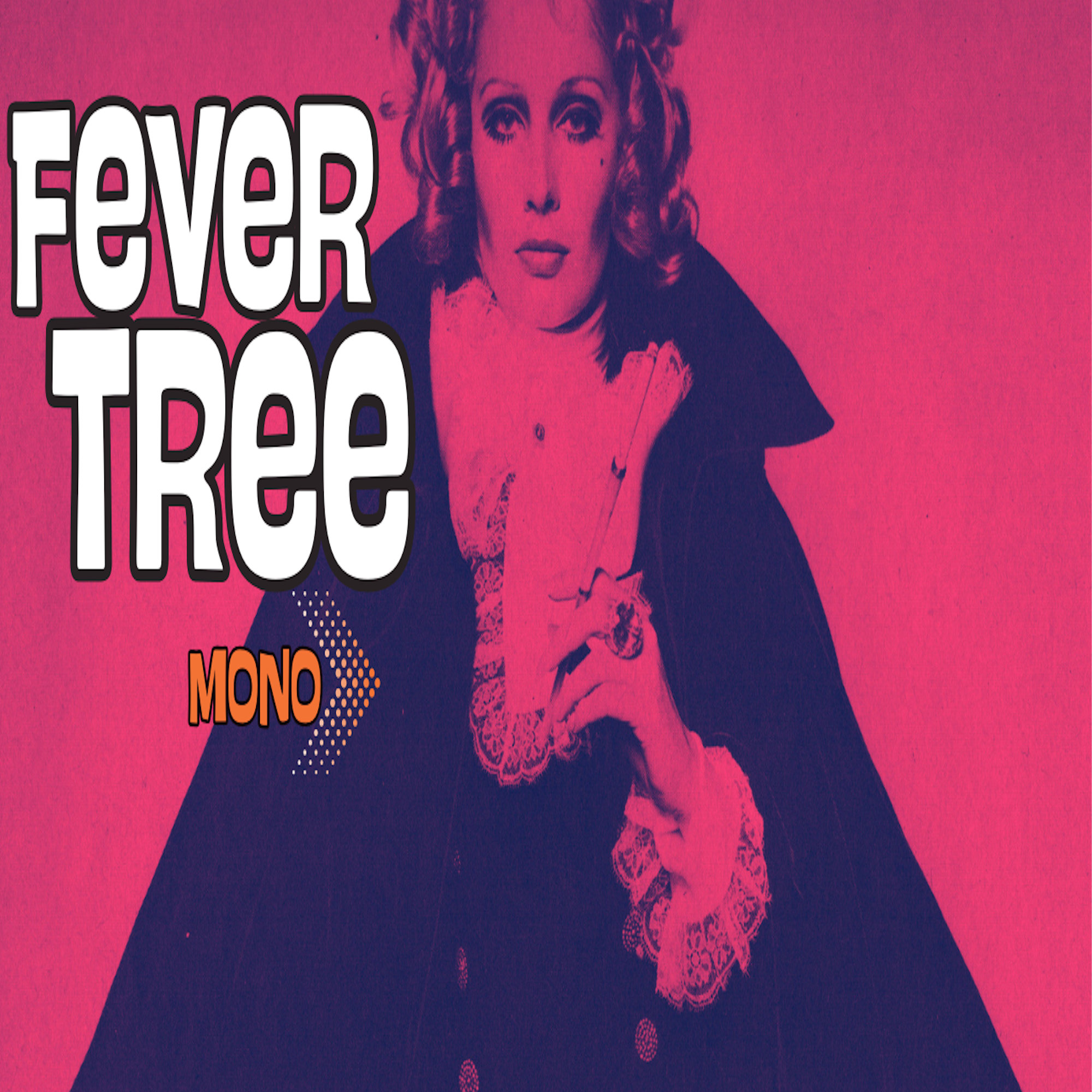
Fever Tree – “San Francisco Girls (Return Of The Native)” / “Come With Me” (UNI 55060) April 1968
Fever Tree | San Francisco Girls | UNI | 1968 | Funky backdrop tinged by the unusual use of a steel guitar attracts attention from the very start, and when the tempo picks up on this track, the team moves into a tension-filled psychedelic side that should gain fame for the Fever Tree. Very fine lead and a standout instrumental session can be expected to move into the winner’s circle. Flip: “Come With Me”. (Cash Box, 06/04/68)
the story of Fever Tree
“Almost every retrospective of mid:60s American music seems to stress the West Coast Sound or the New York scene, and somehow pass on any real discussion on the equally fascinating Texas groups. Perhaps because singers and musicians such as Janis Joplin, Steve Miller, Boz Scaggs and Sir Doug Sahm became so associated with the San Franciscan Sound, the music they left behind is often obscured.
There were, of course, several different pockets of music within Texas: Dallas, Houston, Austin, Fort Worth etc . . . all boasted their own bands, including, for example, the 13th Floor Elevators, Kenny and the Kasuals, Mouse and the Traps and the Five Americans. Each of the areas maintained a sense of individuality, but of them all, Houston was probably the most active, at least in the number of bands and records it produced.
The city was also the home of Texas’ premier independent label, International Artists, which snapped up several local groups, the Bubble Puppy, Red Crayola, Lost and Found, Endle St. Cloud and the marvellous Golden Dawn. They didn’t catch everyone, another indie, Tantara, signed Neil Ford and the Frantics, and this general ‘happening’ feel soon attracted out-of-state labels, one of which was Chicago’s Mainstream label.
In fact, Mainstream wasn’t exactly new to Texas musicians, they had signed Big Brother and the Holding Company (and thus Janis Joplin) in 1966, and although the relationship was something of a disaster, it perhaps enforced the company’s interest in Houston groups. They would eventually sign up three of them: Euphoria, Josephus and Fever Tree.
Fever Tree | San Francisco Girls | UNI | 1968

Fever Tree had actually played in and around the city for several years, both under this new name and one that they had previously used, Bostwick Vine. They began, like so many others, by playing garage-band type material, but by 1967 they were increasingly using West Coast-type songs in their live set. The two singles which were released on Mainstream, ‘Hey Mister’ c/w ‘I Can Beat Your Drum’ and ‘Girl Oh Girl (Don’t Push Me)’ c/w ‘Steve Lenore’, caught Fever Tree at an interesting transition, and both of them have the group bridging the gap between 60s punk and something a little more mature. Neither, however, made any headway and Mainstream dropped their option on them.
In retrospect, this was probably the best thing that could have happened. It allowed Fever Tree time to consolidate its personnel around Dennis Keller (v.), Michael (I.g.), E. E. Wolfe III (bass), John Tuttle (d. and other percussion) and Rob Landes (pno., organ, harpsichord, cello, flute, clavinette, bass recorder and harp), and it was Landes’ considerable battery of instrumental prowess which helped them develop such a distinctive style. By early 1968, they’d found a new label in UNI, a subsidiary of MCA, who’d moved and signed not only Fever Tree, but another Houston favourite, American Blues, a hard-rock band which featured Frank Beard and Dusty Hill, later of ZZ Top.
Fever Tree then began work on their eponymous debut album, all of which is included here. It remains one of the strongest first albums to be released in the late sixties, showing a remarkable breadth of style and ambition. It ranged from straight ahead rockers to inventive orchestrated ballads, each cut with an equal maturity.
Softer songs
Certainly it began impressively, ‘Imitation Situation One’ was introduced by a Bach fugue, before a sweeping feedback note pulled the song into the following track, `Where Do You Go’. It’s Michael’s guitar tone that is, in many ways, the most striking facet of the Fever Tree sound, that thick, heavy tone, geared for sustain, and one reminiscent of the style Randy California was using in Spirit round about the same time, as well as the less celebrated Gary Quackenbush of Detroit group SRC.
Certainly Michael’s solos on the superb ‘San Francisco Girls’ bear a resemblance to SRC’s definitive anthem ‘Black Sheep’, but the setting is markedly different Fever Tree build up a wonderful song here using some subtle but effective percussion effects and a haunting flute passage, and this excellent blend of softer songs with textured arrangements was scattered throughout the entire album.
‘Come With Me’, for example, was a song in many ways similar to the styles used by Phil Ochs on his brilliant A&M albums ‘Pleasure Of The Harbour’, and ‘Tape From California’, moody, with a sculptured atmospheric backing. But to pick comparisons in many ways takes away from the originality Fever Tree brought to this album.
Fever Tree | San Francisco Girls | UNI | 1968

A song like ‘Unlock. My Door’, a chilling recreation of the Bluebeard legend, was strikingly innovative, its quiet, haunting structure almost perversely at odds with its theme. The group’s harder edge was heard on ‘Ninety Nine And One Half’, a retread of the Wilson Pickett classic which Creedence Clearwater Revival would also try, and on a group original, ‘Man Who Paints The Pictures’, a driving song with some more whiplash guitar, showing fully their ease with such material.
But it’s perhaps the other cover versions on the album which give most insight into the group’s imagination. Of course, the segueing of Beatle tracks wasn’t entirely new, Nilsson had already blended several hits into his version of ‘You Can’t Do That’, but there was something radical about Fever Tree’s squeezing ‘Day Tripper’ and ‘We Can Work It Out’ together, two songs from the same 45, but always seeming markedly different. Here they slot together so naturally, it’s almost as if they were always intended that way.
current technology
Fever Tree’s version of ‘Nowadays Clancy Can’t Even Sing’ is similarly significant. On Buffalo Springfield’s debut album, the song had, as with much of that album, a poignnant emptiness where each of the songs were left a little exposed, but totally natural. Here, Fever Tree embellish the original, adding strings and a deliberately warm arrangement, the way, in fact, that the song may have sounded had the Springfield recorded it for their second album, where the lure of the studio and current technology was wrapped around several of the songs.
As is true of all of the work on their debut album, Fever Tree overstate nothing, the touches are always perfect, and the careful, caring qualities give every song a greater depth. Few first albums are this good. ‘Fever Tree’ in fact sold relatively well in Britain, many of the tracks were played on John Peel’s ‘Top Gear’, and they joined other unlikely groups such as Clear Light, Ars Nova and others as cult U.K favourites.
However, reviews in Texas were less complimentary, and ‘Mother’ magazine, the state’s leading underground paper, was lukewarm towards the album, arguing that it was too careful. that it lacked guts. It seemed that many local fans were disappointed that the fiery edge the group had line was lost in the production.
Fever Tree | San Francisco Girls | UNI | 1968

That criticism may have been responsible for the change of emphasis on Fever Tree’s second album, ‘Another Time, Another Place’. For the main part, the careful, sweetened sound was set aside. and in its place a gruffer, murkier, heavier group came through. Of the three tracks included here, ‘Man Who Paints The Picture Part 2’ best typifies the newer group, good, yes, but less imaginative than the one heard on that debut album.
Some things stayed the same, guitarist Michael still lacked a surname, and the team of Scott and Vivian Holtzman, who had produced and written several tracks on the first album, were still very much evident here. But, in truth, ‘Another Time. Another Place’ was a great disappointment, with ‘Peace Of Mind’ and ‘Death Is The Dancer’, the tracks which closed off the album, the only others to come close to the standard of that debut. From that point on, their career steadily declined.
A third album, ‘Creation’ was released by UNI in 1969, and as well as featuring another remake, this time of ‘Imitation Situation’, it also had a guest appearance from guitarist Billy Gibbons, then currently a guitar hero for Houston’s other favourites, the Moving Sidewalks, and soon to form the third part of ZZ Top. Apart from that however, ‘Creation’ was another disappointment.
For Sale
The group were dropped by UNI soon afterwards, by which time they had moved permanently out of Texas and settled on the California coast. Fever Tree actually built up quite a live reputation there, playing, for example, at San Francisco’s Carusell Ballroom, but they were somehow unable to convert that strength onto record. A fourth and last album. ‘For Sale’, came out on Ampex Records, hinting at the group’s disintegration by featuring several of Los Angeles’ top session men playing in the background.
There were only six tracks on that record, two of which were ‘Hey Mister’ and ‘Girl Oh Girl’ from those very first Mainstream releases, slotted in beside cuts like ‘Hey Joe’, ‘I Put A Spell On You’ and ‘She Comes In Colours’. It was a forgettable album, a sad and tawdry end to a group which showed so much early excellence. Fever Tree split up soon after its release in 1970. with a last rumour that at least one of the group had come to Paris in an effort to find a new inspiration and group there. Apart from that, nothing has been heard of them. all that’s left is a fantastic promise which remained largely unfulfilled. All of that promise is included here. (Dinnes Cruickshank)


Leave a Reply