Kites Are Fun
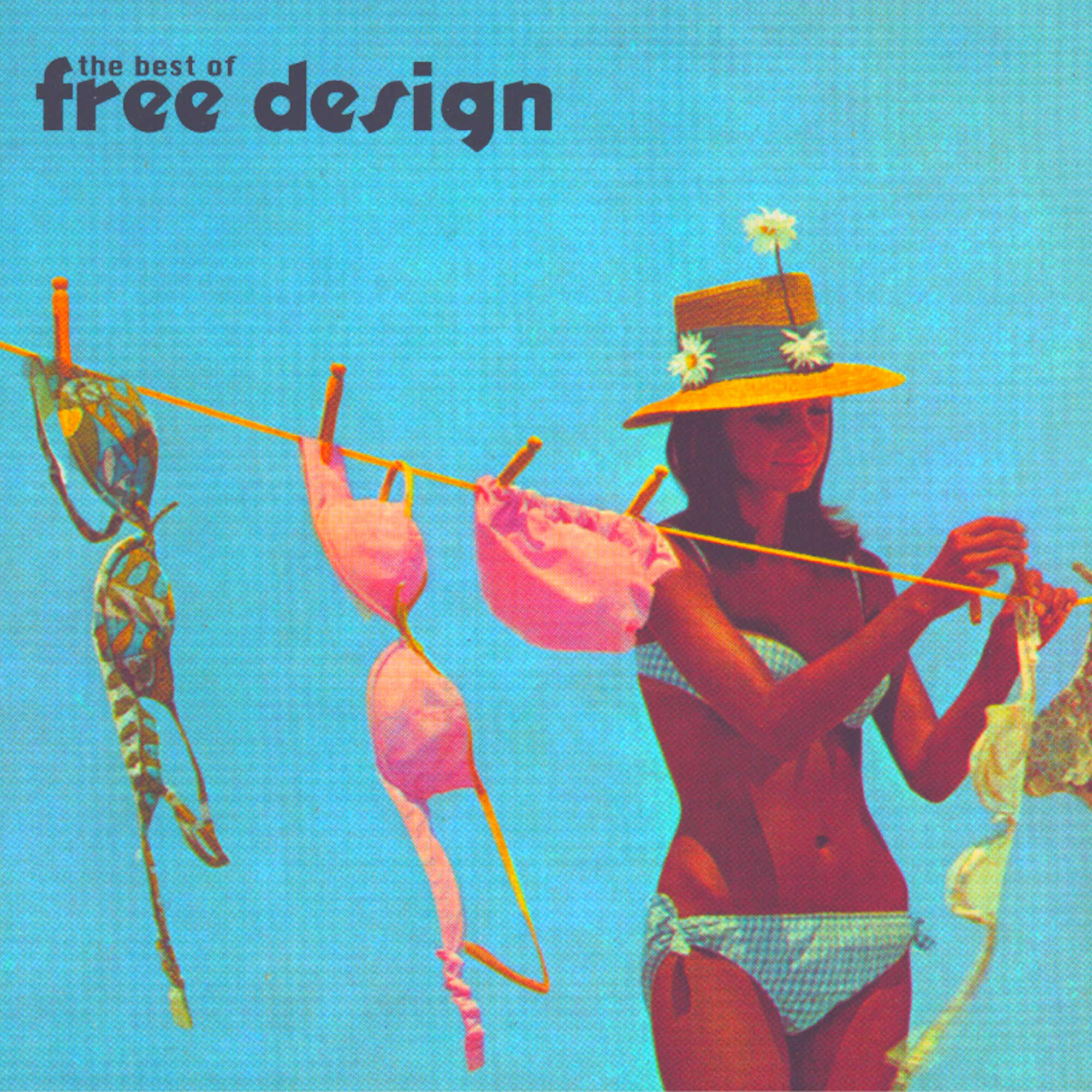
Free Design | The Best Of | (Cherry Red) 2001 | The music of The Free Design is simultaneously very much of its time, of no particular time, and for all times. Sweet, simple and naive at its surface, the recordings made by the family vocal group between 1967 and 1973 harbour astonishingly complex arrangements, and often coyly dark lyrical themes. Compared even to the groups of the time that they most resembled (The Mamas and The Papas, The Association, The Fifth Dimension), The Free Design’s sound may have been too rich a dichotomy for the mass success it so deserved. A distribution system, that consigned most of their records to warehouses, rather than shops, didn’t help either.
Yet, almost three decades after the group’s career unceremoniously ended, The Free Design’s music continues to attract admirers and wield a definite, if subtle, influence among some of modern pop’s most investigative minds (Saint Etienne, The High Llamas, Stereolab, Cornelius). The cult of what has come to be known as, variously, ‘soft pop’, ‘soft rock’, and ‘sunshine pop’ holds the group in godlike esteem; particularly in Japan. The Free Design’s original albums exchange hands for huge sums, and mounting interest in the group culminated this year with the release of the first new Free Design album in 28 years.
This compilation draws from The Free Design’s six albums for Enoch Light’s famed audiophile label, Project 3; as well as their exceptionally rare 1973 swan song, There Is A Song, released on the tiny Ambrotype label.
Free Design | The Best Of | (Cherry Red) 2001

The Free Design’s blend of uniquely exquisite vocal harmonies and feather-light jazz-pop instrumentation (influenced in part by the pre-rock likes of The Hi-Lo’s and The Swingle Singers), and playful lyrical worldview, was recognized immediately by the music industry of the late 60s. No sooner had siblings Chris, Bruce and Sandy Dedrick made their first demo recording than Project 3 won out of several label offers. (Chris explained in 1998 to LA soft pop expert Elliot Kendall that, although Project 3 wasn’t the biggest label that courted them, “Probably the biggest reason we went with [them] was because we felt they would give us the most artistic freedom.”)
Kites Are Fun
The group would go on to record many of its songs at New York’s A&R Recording studio, alongside legendary engineer/producer Phil Ramone and several of the city’s very best session musicians. The group’s first single, “Kites Are Fun” (also the title track of their debut LP), garnered heavy airplay and Top 40 chart status in some North American cities, but peaked at only #114 on the Billboard pop singles chart. This was to be The Free Design’s biggest hit. Proving that their faith in Project 3 was well-founded (and illustrating the dramatic difference in artist development at record companies nowadays), the group, which was augmented in 1968 by sister Ellen, went on to record five more beautiful albums for the label over the next five years.
Chris Dedrick, who was The Free Design‘s primary songwriter and arranger, moved from his native New York State to a rural suburb of Toronto in 1972, where he has established a gratifying and lucrative career as an award-winning composer for television and film. He recalls when the murmurs he’d been hearing about the group’s rediscovery finally bore tangible proof. “Somebody sent me a photograph of a huge music store in the middle of Tokyo,” he says, “and in it was a huge wall display filled with nothing but Free Design CDs. Why [the Japanese] latched onto us is a real mystery to me. I have to go there to find out.”
Free Design | The Best Of | (Cherry Red) 2001

Cornelius, one of Japan’s biggest domestic artists and a huge cultural influence there, reissued the Free Design catalogue on CD on his Trattoria label (co-run with Pizzicato Five’s Yasuhara Konishi) in 1994. Saint Etienne’s Bob Stanley was introduced to The Free Design during a Japanese tour, when Cornelius presented him with the CDs. “I couldn’t believe how their albums looked,” marvels Stanley of Project 3’s superlative designs. “It was as if someone had predicted, in 1968, artwork that would appeal to nineties Japan. Chris Dedrick is an incredibly original arranger. And the lyrics and harmonies sound so unforced.”
Sean O’Hagan of The High Llamas, who also discovered the group’s music in Japan, says, “Their music can sound like a total comfort zone at points, and then swing into bizarre counterpoint which verges on the baroque. Its ambition is immense, as well as being good-humoured and optimistic.”
For his part, Dedrick is quietly humbled by the ongoing interest in The Free Design. “There are so many younger people that are not Free Design fans from way back, but are new fans,” he says. “The thing about the people that are discovering it and liking it is that their interest goes beyond nostalgia, and that shows that there could be a broadening base. They’re just responding to this tone, this frequency.” (Michael White)
Free Design | The Best Of | (Cherry Red) 2001

Chris Dedrick comments on the songs from The Best Of Free Design.
Chorale Just a moment of pure vocal sound to clear the palate.
Kites Are Fun This was the first Free Design song that emphasized the minor second in harmony and transparency in arrangement. For me, the meaning was elusive but showed early seeds of a search for freedom.
Bubbles This song literally pops out of its own image. Bubbles are its atoms and molecules.
I Found Love Somewhat inspired by the big band jazz that was so much of my dad’s life and my early listening experience. There is a joy in the swing, as in the spring. Dawn is Bruce’s daughter.
My Brother Woody Jason is no longer called “Woody,” he and Yanella have little Cayla, and the generations roll along like pages in a family album. The songs hold constellations of memories fixed in the sky, there when we need release from the oppressive present.
Never Tell The World An expression of the difficulties of the unique or unusual in a world that wants conformity.
Love Me A love song that focuses on not only what might have been but what can still be. My Dad always really liked the trumpet on the fade.
Love You Images for children, and especially for the “child within you” (I think Sandy was the first to use that phrase). She, with help from then-husband Joe Zynczak, created basketfuls of them (images) and a couple of children, too: J.J. and Aaron.
I Wanna Be There Having some fun with Paradise.
Daniel Dolphin A parable – intertwining the Buddha and the Christ paradigms.
Starlight This is a kind of sound painting, love under the ocean of ancient light from distant galaxies.
Free Design | The Best Of | (Cherry Red) 2001

2002 A Hit Song C’mon people, don’t let me down.
Children’s Waltz This is a song my dad had published for schools. We all liked it so much. I did this arrangement.
Butterflies Are Free Enoch Light requested that we do this song. He said, “Chris, this is a business and we need to sell some more records.” So I did my best to write an exciting arrangement of this then-current Broadway show-tune.
One By One This is one that we sang a lot in live concerts, including several times with full orchestra. It was a bit of a theme song for the late years of the first incarnation.
You Are My Sunshine Before this came out, a musician friend heard it and said, “This is too pure for human ears.” I’m fond of the re-harmonization, even re-characterization, of the song in this arrangement.
You Could Be Born Again This song began its life as “Beginnings”; I had conceived it as the opening song of our second album. Enoch suggested the new title. This was before “born-again” became an adjective. The song grew in meaning as our group expanded to include Ellen, and then again as our cousin was killed in Vietnam.
Kije’s Ouija A favorite tune from my concert-band experience turned, with heavy doses of free association, into a fantasy/fairy tale. I don’t have much experience with the board myself, but I’m sure there is something to it.
Love Does Not Die In the very still moments when you feel incredibly small, you take the Teachings of the Absolute as a mantrum of hope.
Tomorrow Is The First Day of The Rest of My Life Another cover suggested by the folks at Project 3, it seemed to fit our basic optimism. Funny how many commercials we did for products like Zest, Scope, Light’n’Lively . . .

Leave a Reply