
LP Reviewed in Melody Maker, 5th January, 1980
The Ramones | End Of The Century | (Sire) 1980 | (Sire SRK 6077) LOS Angeles, anyone? Having created, then squandered, one of rock’s finest legacies in the space of a decade, America’s West Coast has come to deserve what it gets.
It got Devo. And, for this album, The Ramones, who should have got what they long deserved, in the shape of a Phil Spector production. The reason why they haven’t aren’t especially Californian, but it has helped.
To stay in business rock has to move faster than any of its individual pace-setters, with the result that one day’s innovation is the next day’s formula.
The Ramones might never have been original but they were individual; by expanding one style into a career they did become a process and, of late, a fairly despondent one.
“End Of The Century“, produced by Spector and recorded at the Gold Star Studios, LA, is a record of formulae, of the familiar Ramone drone and the Spector wall of sound.
Even on that basis it could have been a masterpiece, the conflict between the band’s studied amateurism and the producer’s immaculate professionalism sharpening and revitalising the old process.
The Ramones | End Of The Century | (Sire) 1980
Had a little more effort been put in, it could as easily have been a fascinating disaster. In the event, its more a study in sloppy mediocrity.
The basic flaw seems to have been a lack of communication between group and hired guru (silent paranoia versus monosyllabic grunts is not an ideal form of chemistry).
There hasn’t, of course, been anything in Spector’s recent past to signal a grasp of punk (Leonard Cohen excepted) while there’s been plenty in the Ramones history to indicate a fast-approaching demise.
The final result is, not surprisingly, a record that fluctuates between sub – standard Ramones with added frills and a fat, empty production in need of thrills.
The material must carry much of the blame, in as much as it’s mostly atrocious. Aside from dragging out “Chinese Rock” and “Rock ‘n’ Roll High School” for unnecessary repeats, most of the songs come across as re-runs of past peaks, verging on parody.
The lyrics confirm that things have got a little barren in the Ramone home; in place of the oafish, off-the-wall wit that shone across the early albums is an almost morose introspection, filled out with sequels to past songs and stock, misguidedly militaristic legend-building.
The Ramones | End Of The Century | (Sire) 1980
There are redeeming moments — viz. -exquisite “Ba-ba-banana, this ain’t Havana” chorus of “This Ain’t Havana” – and a couple of the songs themselves aren’t bad.
After the appalling radio pastiche of “Do You Remember Rock ‘n’ Roll Radio” (all corn and no kitsch), “I’m Affected” reasserts the power of Ramones through a thundering Spector production, their thin, metallic sound plastered against a screen of timpani and dropped bass hooks.
“Danny Says” lifts the tune of the Beach Boys’ “Sloop John B.” and sets it against a brilliantly maladjusted surf lyric (“Danny says we gotta go/Gotta go to Idaho/ But we can’t go surfin’ cause it’s 20 below”).
“Chinese Rock” is played hard, nasty and better by Johnny Thunders, while “The Return Of Jackie And Judy” boasts some cleverly mutated hand-claps that sound closer to broken cheekbones.
Side two opens with Joey rasping out “Baby I Love You” in a tribute to bad taste and humour that’s too deliberate to be either tasteless or funny after the first time.
From there on it’s a downhill slide to the end; for no apparent reason Spector appears to give up on the last three tracks before the band come out in sympathy for the last two, contenders both for the worst Ramone song ever written.
“End Of The Century is overall, the worst album The Ramones have made and appears at a time when their best was needed. (James Truman)

All about the album
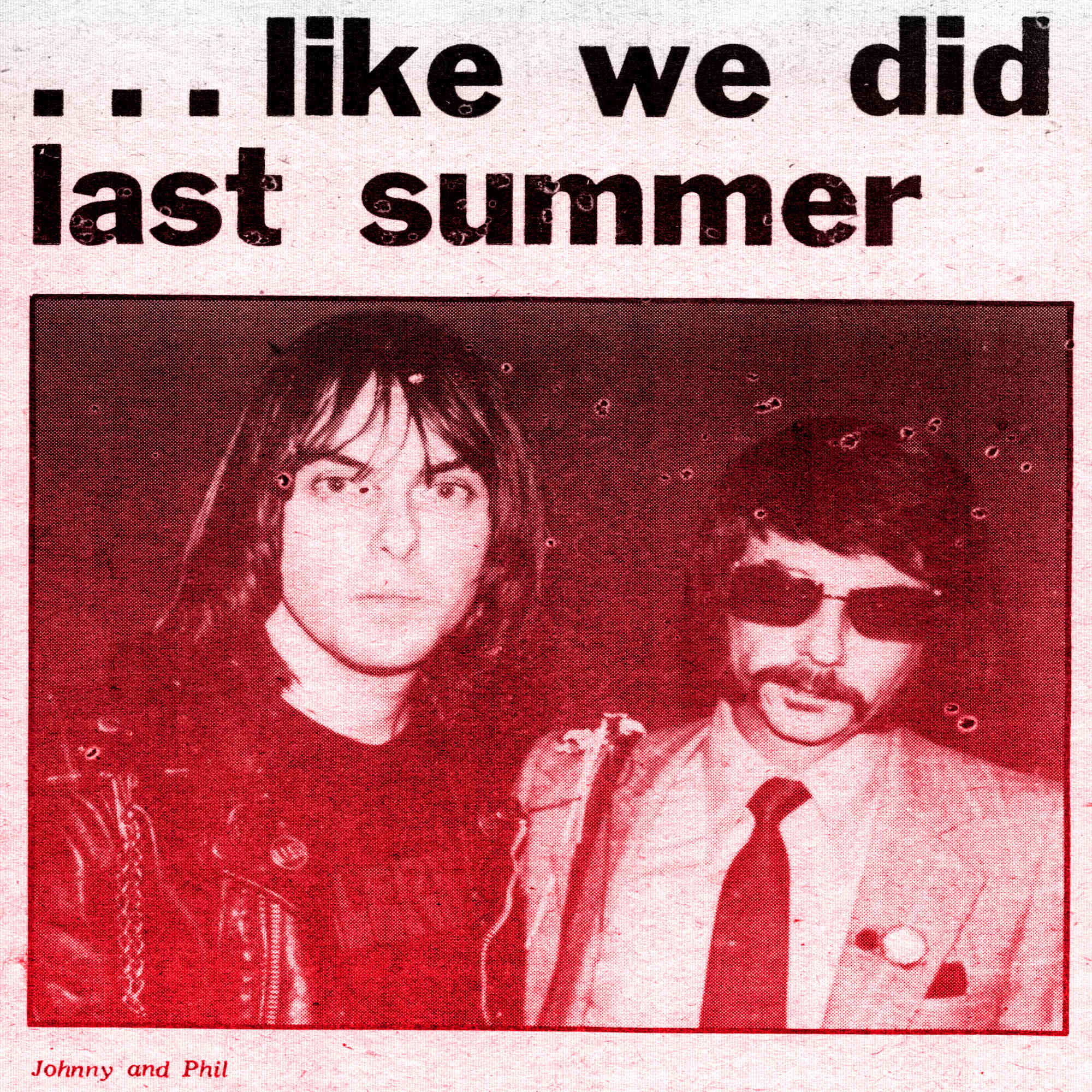
On May 1, 1979, the Ramones entered legendary Gold Star Studios in East Hollywood, California, with producer Phil Spector. I was there, covering the action for London’s Melody Maker.
The progenitors of punk rock had already created a legitimate legacy with albums such as Rocket To Russia, Leave Home, Road To Ruin, and especially their self-titled LP, which stuck to the listeners’ synapses like a garage-staining fungus.
But End Of The Century brought them together with one of the true architects of sonic studio moxie, Phil Spector, and was cut at a recording studio that had seen not only Spector’s finest work but also classic sides by the likes of Buffalo Springfield, The Beach Boys, Iron Butterfly, Sonny & Cher, Herb Alpert & The Tijuana Brass, and Eddie Cochran, among others.
You can hear and feel the subtle audio elements that contributed to the records produced in this building. The Ramones made their way to Spector and Gold Star via several denizens of the L.A. music scene.
The band had played on a cover of “Surfin’ Safari” for Rodney & The Brunettes, legendary DJ Rodney Bingenheimer’s side project. Producing the track was local creative duo and Spector pals Dan and David Kessel.
The Ramones | End Of The Century | (Sire) 1980
“Dan and I got on the phone to Phil,” David Kessel remembers, “and played [Spector] some of what we had produced with the Ramones. His immediate reply was that we should pick up some pizzas and bring the Ramones over to his mansion in Beverly Hills. That was truly a happening night.”
Bingenheimer and the Kessel brothers also brought Spector to see a Ramones show at the famed Whisky A Go Go. In an interview with Berkeley-based pal and veteran music journalist Jaan Uhelszki, Joey remembers how Spector initially wanted to record him solo.
“I guess the way it originally came about is Phil wanted to do a solo record with me, but it was a little premature. This was only our fifth record,” he told Uhelszki. “It excited me because he loved my voice. He would say to me, ‘I’m going to make you the new Buddy Holly.’
As for the rest of the Ramones, they thought he was trying to steal me away.”
Spector’s direction
Joey also recalled how the Ramones spent very long hours in the studio under Spector’s direction, which wasn’t what the band was exactly used to: “Phil insisted that we play songs over and over.
The entire process took only three weeks, but in Ramones time, it was interminable.”
Drummer Marky Ramone has great things to say about his End Of The Century experience but remembers how Joey wasn’t the only band member who felt time at Gold Star often seemed endless.
“John and Dee Dee were used to working fast, and Phil worked at his own pace, which really frustrated John and Dee Dee because of how things were working.”
Larry Levine, one of the engineers on End Of The Century, offers his insight into Spector’s process:
The Ramones | End Of The Century | (Sire) 1980

“I used to have a theory, and I don’t know if it’s right or wrong,” he starts, “But part of the reason we took so long in actually recording the songs was that Phil needed to tire out the musicians-[till] they got to the point where they were tired enough so they weren’t playing as individuals, but they would meld into the sound more that Phil had in his head.”
Recording with Spector, and tolerating the maestro’s demanding hours, resulted in the logical next step in the Ramones’ musical evolution.
Needles And Pins
Following the group’s initial experimentation on Road To Ruin-which featured 12-string acoustic guitars in the mix, and what, for the Ramones, amounted to a genuine ballad with the Sonny Bono/Jack Nitzsche ’60s classic “Needles And Pins” -the progression to End Of The Century was the culmination of the band’s desire to make a great rock ‘n’ roll record.
In fact, in his interview with Uhelszki, Joey remembered what Spector told the band during one of their meetings:
“[He said,] ‘Do you want to make a great album or a good album?,’ insinuating that if we didn’t work with him, our albums would only be good.”
The record definitely has moments of greatness. The opening blast of “Do You Remember Rock ‘N’ Roll Radio?” is the perfect balance between Spector’s Wall of Sound and the Ramones’ Wall of Buzz.
This is the one track on the album where the fusion of the Ramones’ and Spector’s sensibilities exceed the burden of heightened expectations.
Domenic Priore, of the pop fanzine Dumb Angel Gazette, reinforces the success of the Ramones and Spector pairing on the tune:
The Ramones | End Of The Century | (Sire) 1980
“They came up with a single that summed up what could be right and was definitely wrong about what was going on in the late ’70s, and its questionable links to the past and future of music itself . . . the kind of record that was a natural for the airwaves that the Ramones, and those who stuck to their guns, were, and are, kept from.”
The dark romanticism of the next song, “I’m Affected,” is driven home with loads of echo on Joey’s vocal and a menacing backing track from Spector and the band that underscores the track’s proclamations of love with a threat of violence.
On the sweeter side, echoes of The Beach Boys’ “In My Room” float through “Danny Says,” from its delicate, chiming guitars to the childlike intonations of Joey’s singing.
Chinese Rock
The lyrics, dealing with “a typical day in the life” of the Ramones on tour and including numerous insider references, make this one a particular fan favourite.
“Chinese Rock,” a track written by Dee Dee, was initially rejected by the other Ramones and given to Johnny Thunders & The Heartbreakers to record.
The Ramones decided to give it a go for EOTC. In his interview with Uhelszki, Joey felt the Ramones’ version “lacked edge and aggression.”
Nevertheless, the Ramones’ take on the heroin song is a driving, pounding cut. And while it doesn’t quite reach the feverish levels of the Heartbreakers’ version, it still rocks plenty hard.
The record’ s fifth cut, “The Return Of Jackie And Judy,” is a musical sequel to “Judy Is A Punk” from the Ramones’ first album. (For this track and “Do You Remember Rock ‘N’ Roll Radio?” I contributed hand claps along with Rodney Bingenheimer, Maria Montoya, Jeff Morrison, and Phast Phreddie.)
Revisiting the past is always a dicey proposition, and the song’s a pale carbon copy of the prototype.
Marky Ramone agrees: “I don’t like, ya know, stories that continue into another relation song that develops. I felt it was kind of corny.”
The album’s midway point, and one of two tracks on the record co-written by Johnny and Dee Dee, is “Let’s Go.” Beyond the Soldier of Fortune bravado in its lyrics, it’s easily the punchiest tune in the bunch and the one cut that sounds like it could have been an out-take from one of their previous records.
Spector was against recording anything he had previously done, but at the urging of the band, Sire label head Seymour Stein, and Brian Wilson, he agreed to produce a cover of Barry/Greenwich/Spector’s “Baby, I Love You” for End Of The Century.
The Ramones | End Of The Century | (Sire) 1980
Despite Joey’s terrific vocal, the Ramones’ version unfortunately comes perilously close to disco to make for entirely comfortable listening for most of their fans; and the slick production and strings overwhelm the song’s natural charm. Consequently, it’s easily the most divisive and disliked song on the album.
Perhaps an even better Ramones homage to the girl groups of the ’60s is “I Can’t Make It On Time.” This Ramones-penned gem of a pop tune really is an affectionate tribute that’s all their own and one of the band’s lost classics.
Ba-ba-bananas
Another incredibly infectious track on the record is “This Ain’t Havana,” co-written by Dee Dee and Johnny. With it’s cartoonish “ba-ba-banana” chorus, it’s the album’s best example of the band’s celebrated sense of humour. Nonsensical lyrics with a crushing rock ‘n’ roll backbeat—it doesn’t get much better than this.
A rerecorded “Rock ‘N’ Roll High School,” slotted in as the album’s tenth track, features fleshed out production that loses some of the raw kick of the bare-bones original.
Still, it’s absolutely one of the Ramones’ best songs, with great hooks and an insanely catchy lyrical refrain (“Rock, rock, rock, rock, rock ‘n’ roll high school!”) that sticks in your head the way bubblegum sticks to the bottom of a sneaker.
The last two cuts from the album, “All The Way” and “High Risk Insurance” round out End Of The Century in solid Ramones style. Surprisingly, Spector doesn’t tamper much with the basic guitar-bass-drums attack that the band was justifiably famous for, and they deliver a pair of straight-ahead rockers.
With both Phil Spector and the Ramones now considered certifiable legends, the result of their collaboration still remains a point of fascination, even one for those involved.
The Ramones | End Of The Century | (Sire) 1980
“I still listen to the record and try to understand what Phil did, which can baffle a lot of people. He’s like a conductor,” sums up Marky Ramone, I was amazed how a certain sax can jump in, then a certain guitar tone would pop up . . . . the way the roto-toms bounced off the walls to create that low-end hum after the end of the hit, which bounced right back onto the recording.”
Dee Dee Ramone was equally intrigued by the record, especially in hindsight:
“Now I realize more and more,” commented the bassist in February 2002, “with time Joey’s voice had a real deep, deep part of the Ramones’ sound. And really that started with End Of The Century. I think Phil Spector and Joey were a great combination. Phil brought out the romanticism in Joey.
Baby I Love You
He was like a romantic guy, and some of the songs and productions on End Of The Century pushed that . . . And ‘Baby, I Love You’ on End Of The Century—I never thought there would be a string section on a Ramones record, but I like it.”
Regarding the cover of “Baby, I Love You,” Johnny Ramone offers a different point of view:
“Yeah, I wanted to do a Phil Spector song . . . . I realized that it was a mistake, and to me it was the worst thing we’ve ever done in our career.
“But on ballads like ‘Danny Says’,” Johnny continues, more upbeat, “the production work is tremendous. On ‘Do You Remember Rock ‘N’ Roll Radio?’ the production works. On some of the things it works, some of the things it doesn’t work. Because of the echo and reverb. I can’t separate; I like to distinguish the guitar from the bass guitar from the drums. I can’t distinguish the separation, because it’s muddy. That’s the sound.”
“You either loved it or hated it,” Joey told Uhelszki of End Of The Century. “I like the record. I wrote a lot of the songs, and had a lot of ideas—I had more free rein . . . . A lot of those songs wouldn’t have sounded the way they do if someone else would have produced it.
The Ramones | End Of The Century | (Sire) 1980
Like ‘Danny Says,’ and ‘Do You Remember Rock ‘N’ Roll Radio?’ Songs like that really sound great . .
“The thing was, Phil had never worked with a band before, especially a band like us; his artists were more of his own conception,” Joey continued. “The Ramones were a band, and we had our own focus, and Phil had his own focus, and in some ways it was a clash.
The thing is, Phil likes to dominate and manipulate, so it was a little strange. But on the other hand, I felt like I was performing for the master, you know what I mean? I learned stuff from Phil; it was the kind of experience few people have.
High-drama person
“It’s a historical record,” concluded Joey, “and one of the last ones Phil actually completed. He’s a very passionate, high-drama person. I still admire him. Of course, I can say this now looking back on the situation—but during his episodes nobody was enjoying, or having any of it.
All work ceased and we were all pissed off with his drinking, his antics, high drama, and the insanity.”
Contrary to popular belief, the End Of The Century sessions with Spector didn’t fracture some already-established brotherhood bond between the Ramones, nor was it as dramatic as depicted in the folklore around the LP’s initial release. (Although, according to what Joey told Uhelszki, it was true that Phil, who had been packing heat ever since a recent robbery, pulled a gun on Dee Dee—after Dee Dee had taken a swing at him.)
“The Ramones were a pain in the ass, too, come on,” Dee Dee admitted. Still, he added, “Playing with the Ramones was wonderful—it was probably like bungee-jumping.”
Joining this tumultuous brotherhood on some of End Of The Century’s tracks were several guests and friends.
“The supplemental musicians on End Of The Century,” confirmed Dee Dee, “the guests had to save it. They made an impression on the way things were recorded, and we’re lucky we had ’em. I think I played my bass parts, but everybody tried to help make the record. Thank God Ed Stasium was there, and Jim Keltner, and the other tall guys [referring to the Kessel brothers].”
The Ramones | End Of The Century | (Sire) 1980
Longtime Ramones associate Ed Stasium served as musical director on End Of The Century and deserves an office in the U.N building for his efforts.
“Ed was a very skilful guitar player and producer,” Dee Dee mentioned. “Phil didn’t have to say too much to us. Phil could ask Ed, and he would translate to avoid conflicts. Musicians don’t take well to criticism. I was having a good time, no matter what. The more people who were there, the safer I felt.”
If you were to ask Barry Goldberg, songwriter-producer (as well as the keyboardist with the Electric Flag and several Bob Dylan sessions and live gigs), he had one of the most incredible times of his life playing organ, keyboards, and what he calls “a celesta kind of Buddy Holly thing” on the record.
Mitch Ryder
“Phil called me up in 1979,” Barry opens, “and said, ‘I’ve got something really important for some sessions.’ But he didn’t tell me what it was and I didn’t know until I walked into Gold Star.
“I found out when I walked in and saw all the Ramones, right. I loved the Ramones. They were rock ‘n’ roll. And I started talking to them, and they found out I played keyboard on the Mitch Ryder stuff, and they loved ‘Devil With A Blue Dress On.’ They accepted me.”
Renowned drummer Jim Keltner played on “Baby, I Love You.” Jim had known Phil for years and worked with him many times, including sessions for Leonard Cohen and John Lennon in both the U.K. and in Hollywood.
“The Ramones played great together. Their drummer Marky was remarkable,” Keltner remembers. “They had lots of power and energy. It made sense that Phil would produce a record for them. I mean, he’s always been punk.”
Dan and David Kessel, the brothers who helped bring the Ramones and Spector together, have recorded with Phil Spector since John Lennon’s 1975 album, Rock ‘N’ Roll.
The Ramones | End Of The Century | (Sire) 1980
Recalling the End Of The Century sessions, for which they added some guitar, Dan Kessel notes, “Johnny Ramone was the new Link Wray. We were proud to be Ray-Men. Johnny was a phenomenal bandleader. Dee Dee and Marky were both extraordinary too. And Joey was inspirational.”
I have vivid memories of watching Johnny play guitar during End Of The Century. Frantic, aggressive down-strumming. This is not someone who owned a Mel Bay guitar book.
“Well, I bought the guitar in January of ’74,” he grins, “and we started playing CBGB’s in August of ’74,” Johnny recollects. “I started down-strumming to keep time, ya know. And I also liked the way Jimmy Page played on ‘Communication Breakdown.’ I liked the way it drives.”
I also remember Joey recording his vocals with a setup unique to a studio. Boris Menart, the other engineer on the album, notes,
Ed Stasium
“[One] thing Phil did was when they recorded Joey’s vocals, because he was so used to standing onstage holding his microphone. he would sing with one microphone on the stand and another microphone right above him that would record as well.
He was so used to standing holding a mike in front of his face when he was singing, he was sorta comfortable like when he was onstage. In the mix we would bring his vocal back so he wasn’t right on top of it.”
The week before they flew to Los Angeles for these famed Spector sessions, the band recorded demos with Ed Stasium, five of which are included on this reissue.
“These were the first demos I did with the Ramones,” says Stasium. “We did them all in one day. Johnny ran it like the military, all prepared and ready to go. We cut them on a Thursday, and the next week we were in Hollywood rehearsing at Studio Instrument Rentals for four days before End Of The Century started with Phil,”
The Ramones | End Of The Century | (Sire) 1980
Stasium remembers. When the record was released, it received great acclaim from much of the mainstream press (notably Rolling Stone and Time, which deemed it one of the best rock albums of the year) and would go on to become the Ramones’ biggest chart success (#44 on Billboard).
Yet fan-base attitudes ranged from mixed to downright hostile. For many in the punk scene, the band had sold out to make a hit record, which was unforgivable.
To others, the Ramones had simply been eclipsed by the very English bands they had inspired, like The Clash, the Sex Pistols, and Generation X.
Either way, End Of The Century, ultimately, was the death knell for their brand of original, ’70s-style punk. Punk fans and bands alike had already begun to diverge into the commercial streams of new wave and the edgier, aggressive hardcore scene.
It was only fitting that the Ramones, who had kicked off the revolution, found themselves recording its final, gasping farewell.
Though punk fans remain divided on the album’s merits, there is a growing cult of admirers who embrace it. According to Martin Banner of Flipside, Los Angeles’ longest-running punk zine,
“The best thing about End Of The Century for me is that they stayed true to their heroes. The Ramones loved the bass-guitar-drum churn of the early Beatles, the Wall of Sound of the Spector girl groups, The Beach Boys’ perfect, three-minute pop gems, and the roar of the ’60s garage bands.
The Ramones | End Of The Century | (Sire) 1980
They fused them all into one amazing, under-rated record. It’s a rock ‘n’ roll car-crash of Spector-sized ambition and Ramones’ energy that sounds better and better with each passing year.”
In the end, End Of The Century (the title was Spector’s) was the by-product of environmental historic tensions; faith-based initiatives; stress; instrument collision; passion, fury, and confusion; freedom of will; pay cheques; a continuing musical education (for every-one involved and hopefully everyone listening); the Professional Musicians Local 47 union; alcohol and soft drinks; herring, tongue, and hearty, faithful corned-beef sandwiches from Canter’s deli; and particularly the harsh melodic tunes on oxide-soul contracts played by a nervy rock ‘n’ roll band, aided by a few deck hands, produced by a Capricorn maverick music man.
And it’s an album that makes a definite sonic impression. Even though they would never be quite as ambitious again, the Ramones would continue soldiering on, into the ’80s and beyond, loudly proclaiming, “We Want The Airwaves” on their next album, Pleasant Dreams, and keeping the flame alive for those who believe. (Harvey Kubernik)


Leave a Reply