
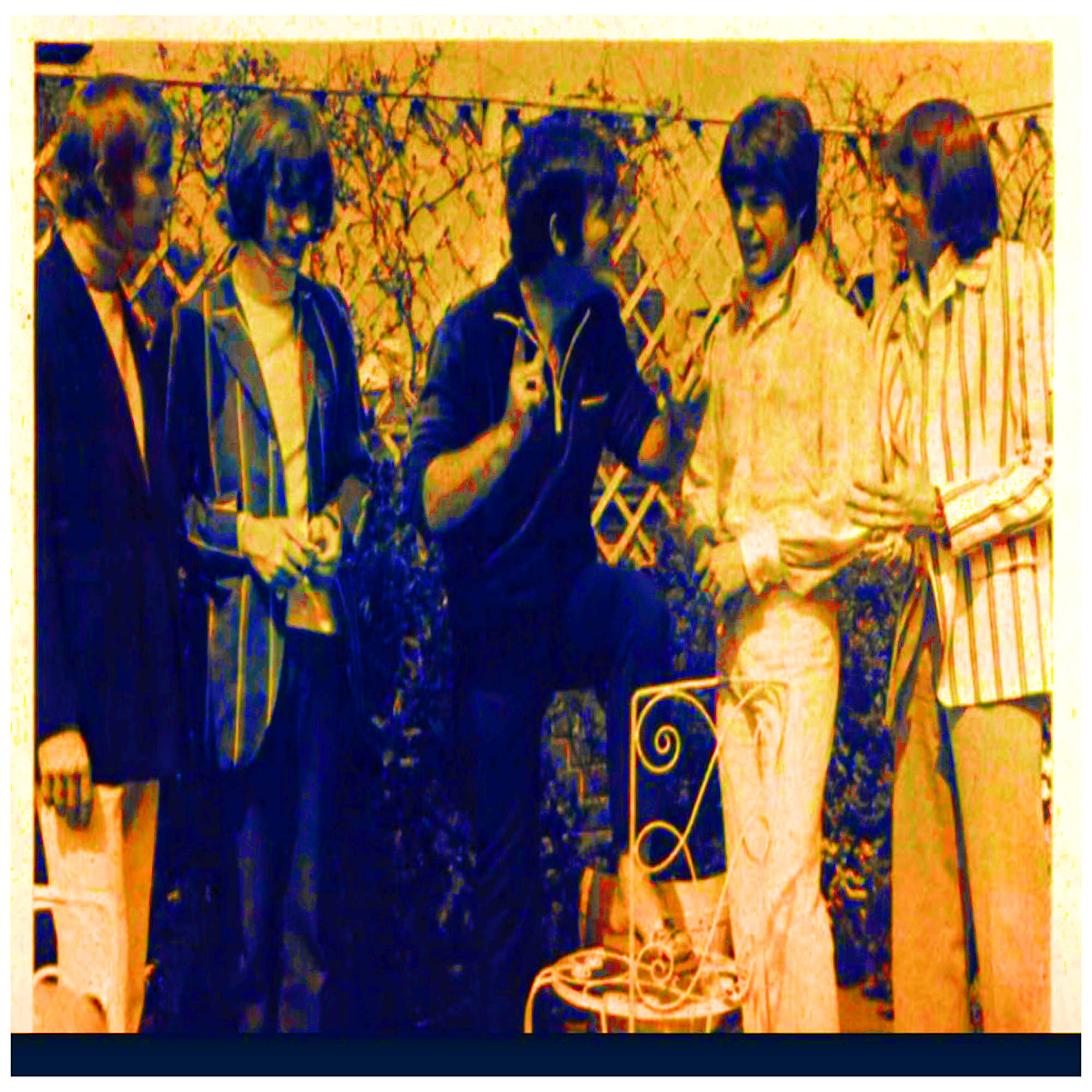
Article published in Rave magazine – October 1967
Alan Freeman in an exclusive RAVE Heart-to-Heart interview
Bee Gees’ Battle with the British Government | Five boys called the Bee Gees left Australia some months ago to come and seek their fortune in the British pop world. They found it. Their first record, “New York Mining Disaster”, made the Charts.
Their latest “Massachusetts”, looks like doing the same. And they’ve earned hundreds of thousands of valuable dollars for Britain. But Britain doesn’t want them any more. Here they talk about their fight to be allowed to stay, and their battle with the Red Tape of the British Government.
I tell you, friends, I’d never seen a more mournful line-up sitting around my apartment. Bee Gees that day could stand for just about anything you care to name in the way of disaster – Bloomin’ Grim . . . Broken Group . . . or Banished Glory. All because of the Blackhearted Game of the British Government.

Bee Gees’ Battle with the British Government
The Bureaucratic Gods had told Colin and Vince to Be Gone. This was to Be Goodbye. Which accounted for Bitter Groans.
Ex-drummer Hughie Gibb, father of Barry, Maurice and Robin, stared glumly at his feet. “Why do you want to break these kids up?” he asked. “They’re doing the very job the Government is begging people to do. So they reward Colin and Vince by throwing them out.”
Robin and his twin Maurice nodded in unison. “In the last twelve weeks we estimate we’ve brought into this country or earned from foreign royalties on our records 250,000 dollars. Others who earn dollars are given the M.B.E. or invited for a nosh at Buckingham Palace.
“Not us. They hit us with a stupid rule and treat us like criminals.”
Rules. The British obsession. Every time I pick up the paper or turn on the TV, there’s H. Wilson saying, “Come on, babies – out of bed and get the bread, or else the pound sterling will soon be worth none-pence.”
But when it comes to rules, everything stops.
Child Star
Colin Peterson, the only native-born Australian of the group, knows about British rules from way back – from the time he was nine years old, in fact.
Even then he was earning foreign currency for hard-up Britain.
As a child film star he was in several hit pictures, including “Smiley”, “The Scamp” and “A Cry From The Streets”, in which he co-starred with Max Bygraves.
It so happens, however, that the rules in some parts of the country prohibit anybody under thirteen from working . . . but in other parts they don’t.
In theory, if there’s a film being made with a child star in it, the local powers-that-be have the right to walk into the studio and stop the whole caper.
And yet, although while the film is being made everybody concerned with it is going Shush-don’t-breathe-a-word-about-the-kid, when it’s finished it’s quite often selected for the annual Royal Film Performance!

Come-down
The Queen herself has been the guest of honour at past film shows starring under-thirteens!
So Colin was kicking himself over the Bee Gees come-down, because with his experience he should have known how crazy the rules lark can get.
He came to London last February to join the boys as drummer., He started with them on the day their first British single, “Spicks And Specks”, was released.
“Before I left Australia,” said Colin, “I went into the British Embassy and asked if I needed a permit to work in England. They said I didn’t. All I had to do, they told me, was to get a visitor’s visa. ‘When you get to England’, this official said, ‘just take into the Home Office and they’ll stamp it’, Unfortunately I found out there was a lot more to it than that.”
Bee Gees’ Battle with the British Government
Vince Melouney, a lad who made all Sydney flip as Australia’s No. 1 guitarist, was stunned when he too was treated as an obscure and suspicious character – and denied a permit to work here.
“You should have applied before you came,” he was told. “If you want a permit now, you’ll have to leave the country and then apply again.”
“And how long will that take?” asked the trusting Vince.
“Between eighteen months and two years,” replied the lofty rules enforcer.
So Vince, who joined the group in May, discovered that his Bee Gee career would have to end by the middle of August, when he and Colin would have to leave. After some publicity, fuss and protests, the Home Office agreed to fix a new dead-line. September 17.
“We thought of asking a Member of Parliament to help us,” said Vince. “Until we found out that Parliament was on holiday until Winter. Lucky for some.”

Fed Up
Barry Gibb wasn’t there. He was ill. “But he’s as fed up as we are,” said Colin. “It’s really rough, when you’ve felt as close to England as I have, and paid as much tax from the time I was a little kid, and then they don’t want to know you.
“I know it isn’t the English people themselves who want it this way, just little guys with a little bit of authority – clerks behind counters who won’t even tell us why they won’t let us stay.”
“Another thing,” said Vince. “It’s not as if we had got together and formed the group just as an excuse to get by in England.
“I was the last to join, but we’ve all been in show business in Australia a long time. And we’ve known each other for at least four years.”
“Right,” said Robin. “When Barry and Maurice and I were making a record, Vince and Colin used to come to the studio and add things to it. And sometimes us brothers would chip in on their records too.”
Bee Gees’ Battle with the British Government
Vince comes from Sydney. I’m from Melbourne myself – and usually the two cities get along about as well as cowboys and Indians. But in the boys’ predicament, we called a truce on all local feuds.
“You hear a lot of wisecracks about Australia,” said Colin. “But one of the good things about it is that everybody does know each other.”
Dad Hughie put in, “And over there they make a lot of wisecracks about the Pommies. But when the boys and I emigrated from Manchester ten years ago we didn’t find ourselves short of friends Down Under.
It was an Aussie disc jockey, Bill Gates, who christened them the Bee Gees.
Name Game
“Most people seem to think the initials come from Barry Gibb, and a fellow in Sydney said to me one night, ‘I know why they’re called the Bee Gees. It’s because they’re Bloody Great’.
“Another reason for the name was that there was a businessman from Brisbane named Bill Good who was interested in promoting them. With all these coincidences, what else could the boys call themselves?”
The answer, as it looked that afternoon to the stout defenders of H.M. rules and regulations, was – interlopers.
“I can’t tell you what a kick in the teeth it’s been after all we used to believe about Commonwealth friendship,” said Colin. “Look at all the thousands of British people, like Hughie and Robin and Barry and Maurice, who’ve come out to make their lives in Australia.
“What would they feel if we treated them this way?”
“Don’t be silly, boy,” Hughie said. “You know it couldn’t happen there. Whoever you are, you can breeze in anywhere and it’s always ‘Glad to see you’ and ‘How’re you doing?’
“My lads are the same. Always have been, ever since Barry was eleven. I remember one night – it was his second night with an amateur skiffle group and he wasn’t much bigger than the guitar – I asked him how he’d been getting on. And he said, ‘Not bad dad. Only no-one’s discovered us yet’.”

Film Fears
Colin was afraid that the order to leave Britain would spoil his chances of returning to big-time films. The Bee Gees had already lined up to star in “Lord Kitchener’s Little Drummer Boys”, with Dick Lester, who directed the Beatles’ hit picture “Help!”
Since the picture is set in Africa, they hoped they might still be able to take part in it together.
“But it would mean some really awkward difficulties,” said Colin. “If we’re not able to do it, I’ll just give up. I’m thinking of saddling a horse, finding a job on a sheep station in Australia and becoming a buckaroo.
“What’s the use of staying in show business if you’re barred from building your career?”
At the door I shook hands and wished them luck. It was all I could do.
More Bee Gees on the Monocled Alchemist


Leave a Reply