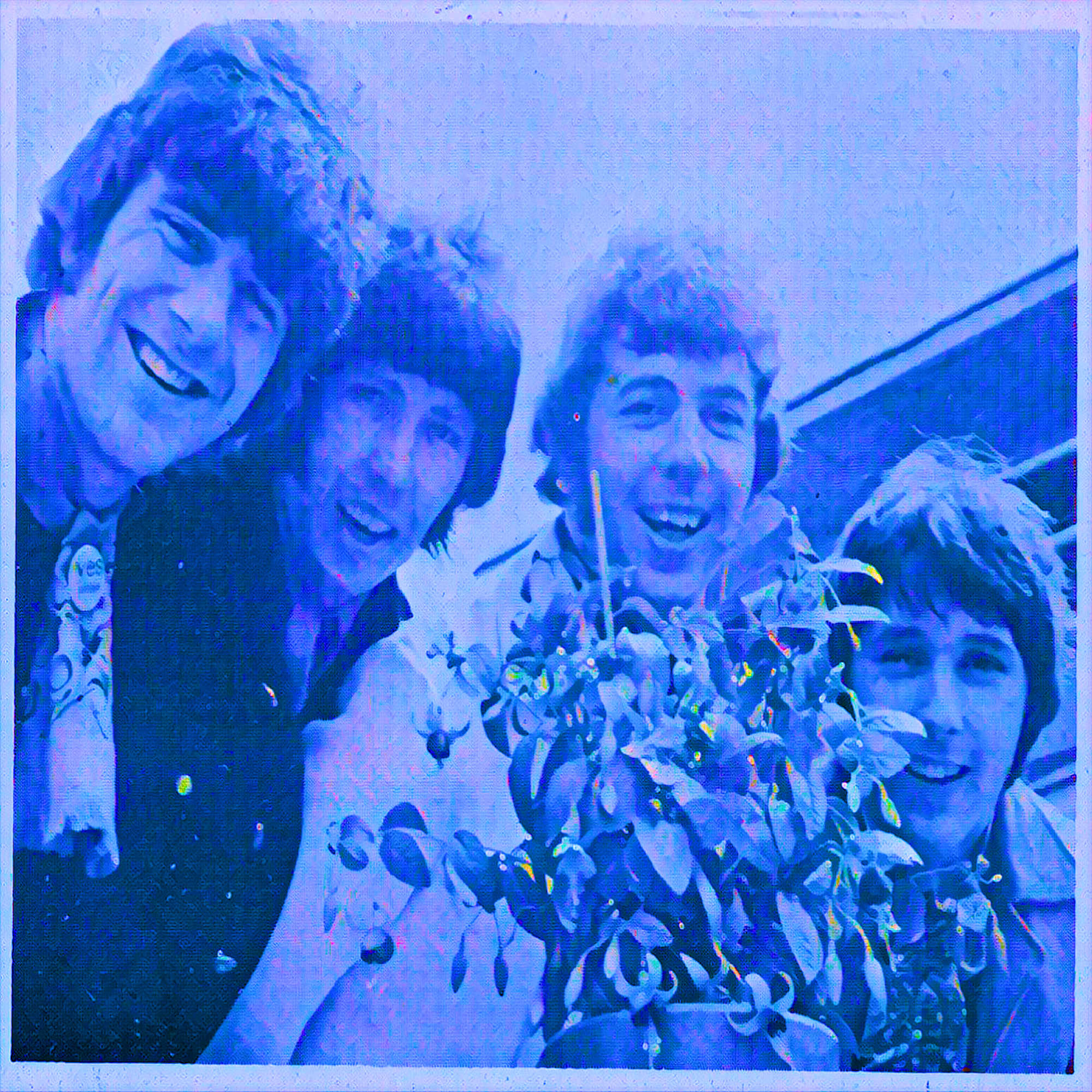
Article published in Rave magazine – September 1967
Alan Freeman in an exclusive RAVE Heart-to-Heart interview
The Tremeloes success in pop | The Tremeloes look back frankly and critically on the bad and the good times of those early years in pop with Brian Poole, and talk about the luck and the work that has put them back on top.
Things had been getting bad, the boys said. Something had to be done. It was like one of those palace revolutions in Shakespeare. Someone was going to have to tell the king that the reign was over, good-bye, Harry-wavers to his throne.
But what was the best moment? And which of the revolutionaries was to do the telling? It had been a long reign. Nearly eight years. The courtiers knew it wasn’t going to be easy to break the news to the monarch. But they knew also that there couldn’t be any hanging about.
It was like the bit in Macbeth. And the famous line fitted the circumstances exactly. “If it were done . . . then ’twere well it were done quickly.”
“We decided it would be straight after we came off stage after a show at Birmingham University,” said Dave Munden.
Alan Blakely said, “They all pushed me forward in the dressing room and said, ‘Tell him’. So I did. “I said, ‘Brian, we’ve all decided we want to go on our own’. It all went quiet and after a while he said, ‘Oh’. “First of all he was against it. But we said we were definitely set on going. So finally he said, ‘Okay, then. We might as well call it from now’. “And with that he walked out of the door.”

The Tremeloes success in pop
“We’ve just seen him once since then,” Rick West said. “And that wasn’t really friendly, was it?” “No,” said Dave. “Not really.” And that is the real inside story of the celebrated split between Brian Poole and the Tremeloes that rare phenomenon of a group that lost its leader and then shot to the top of the Charts as fast as if they’d conquered the force of gravity!
“I’d only been with them a couple of months then the break came” said Chip Hawkes, “but I agreed we’d be better on our own.” The four breakaways, stretched at peace and ease in my apartment, certainly looked as though they enjoyed having broken loose from their old image.
“Us four have the same ideas on clothes, music, everything,” Rick said. “Brian’s were entirely different. It just wasn’t working. As time went on we changed our out-look. “But Brian didn’t. He’s still living three years ago.”
Alan nodded. “You know what his trouble was? He didn’t trust new ideas. When we put them up to him he’d take the mickey out of us.” Dave said, “For three years he told us we were doing good work. I suppose we were—if you call cabaret appearances good work.
But we didn’t like it, and we were getting nowhere.”
Changed Spirits
Maybe I’m a bit sentimental, but I never like to see any partnership split up when the people concerned have slogged to establish it. Nevertheless, I had to admit that in the Trems’ case it was difficult to overlook the obvious change in their spirits.
“This sort of thing is even tougher when you’ve virtually grown up together,” said Rick. “It started at school. Brian and I were in the same class, and we knew Dave. We all lived around Barking, and we decided to form a skiffle group. Everything built up from there. “It wasn’t until we’d had a good success with Brian later on and we were on the downhill period, so to
speak, that we began to fall out with him.
Up to then we’d always been the best of mates. But then we started to realise that we had to have some new ideas, and he couldn’t see it.”
Alan shook his head, grinning sympathetically. “It wasn’t really Brian’s fault, you know. He sincerely thought that the way he saw it was the best for all of us. “But towards the end it was ridiculous. You should have seen us on stage. Brian was wearing collars and ties and all that, and we were wearing gear that was in.
When he saw us in our clothes he’d say, ‘Hello, here’s the fancy dress party’. What could we do?” Dave said, “It was the same with the music. We used to go on stage and play a lot of mad, fast numbers that’d get the audience excited, if that’s the right word. Then Brian would come out with one of his slow ballads and we’d lose the whole thing!

The Tremeloes success in pop | A Real Rave
“We tried to convince him that if we could get a right bit of excitement going and then build and build until everyone was having a real rave, it’d be much better, both for the audience and for us. But he could not see it.”
Getting up to fetch us some drinks, I thought back to the days when I had first known the Trems, when they were returning from their first big overseas tours, with all the nutty souvenirs and gifts and keepsakes that you’re glad to accept until you learn what they cost in excess air baggage.
“Correct me if I’m wrong,” I said, setting down the glasses, “but did Brian used to depend a lot on his mother for advice?” “You’ve hit it,” Alan said. Rick nodded in violent agreement. “That had a lot to do with it. In the beginning when we formed the group, we just called it the Tremeloes. But Brian’s mum wanted his name in front. We let it go because we didn’t see that it made any difference.
band spelling
So it was Brian Poole and the Tremeloes. “But from that day on . . . well there was a difference.” I said, “I suppose about forty-three million people must have pointed out to you by now that the spelling is Tremolos, not Treme-loes.”
“Yeah, we know now,” Dave said. “Actually, we thought at first that it was spelled Tremilos. And we had it that way until some genius in the record company changed it to Tremeloes on the label. The record did well, so we just had to keep it.”
“As a matter of fact, we hate the name any way it’s spelled,” said Alan. “We reckon it’s right old-fashioned. But since a certain amount of people knew us, we decided to keep it when we went on our own.” “We were dumb then,” Rick said, laughing. “We used to think professional groups were people who wore cowboy boots and worked at Butlin’s in the summer.”
A Bit Of Fun
“That’s right,” Dave recalled. “We decided we’d have all these moody pictures taken and learn how to talk like stars. It wasn’t until a long, long time afterwards that we got the message—which was to be ourselves, and to get up on stage and have a bit of fun that people could join in.”
“Yes, and you remember who put us wise?” said Rick. “It was when we were touring with the Hollies. And Dave Butler, the compere, said one night, ‘You know, you’re the only group I’ve seen who get up there and really seem to enjoy it’. And then we tumbled to the secret—just muck about and be your normal selves and it’ll come over a lot better.”
Alan, speaking his usual forth-right Cockney, did an imitation of some groups they’d known in the days before they had a hit record. “Soon as they make the Charts they come up to you, clicking their fingers and going ‘Say, man’ in a Yank accent.
Honestly, they break me up.” “Don’t worry,” I said. “They’ll learn. Now you’ve been making successful records for nearly seven years, which makes you pretty experienced as groups go.
What would you say is the most important lesson you’ve learned in that time?” “That you’ve got to work like mad when you get to the top,” Rick said without hesitation.
“And the Hollies taught us that,” said Alan. “It’s nothing to do with luck or fancying you’re stars. It’s just blooming hard work all the time.” “We’re not going to go wrong this time,” said Dave.

More Friends Now
“Fair enough,” I said. “That’s what you’ve learned as professionals. What’s the most important thing you’ve learned about people?”
“That we have more friends when we’re at the top than when we’re at the bottom,” answered Dave. And he wasn’t joking!
“And the most important thing about music?” I asked.
“Getting birds screaming,” said Alan. I’m beginning to see that’s what it’s all about.”
“How do you apply that idea to singing falsetto?” I said. “Does a group excite birds by singing like birds?”
“Ah, that was just a thing we tried out,” Dave said. “We knew Rick could sing very good falsetto, better than anyone we’d ever heard. But he didn’t have much chance to use it.
So when we were getting some stuff ready for an LP we did ‘Silence Is Golden’ more or less as a novelty track. The record company liked it and they put it out as a single. But we’re not going to concentrate on falsetto. We want every record we do to be completely different from the last. Don’t forget, we’ve had enough of being typed. What we want now is the chance to be natural and to try whatever we like.”
Although the Trems seem to discount luck as a less vital factor in their careers than hard work, nevertheless luck was responsible not only for “Silence” but for “Here Comes My Baby” as well. “We were just fooling about in the studio before a session, warming up,” they said. “We did that one and we thought it sounded good, so we said, ‘Let’s put it in’. And we did.”
Unhoped-for
Wham! Another unplanned, un-hoped-for hit. Don’t tell me that’s not luck!
“Well, maybe not,” said Dave. “People seem to think now and again that the Trems are jumping on the band-wagon. But we were always one of the first to try out new things, even though Brian was uncertain about half of them.
“When we started there were hardly any groups in the sense of today. It was all lead singers and backing groups, like Cliff and the Shadows and us. All the same, I reckon we must have been the first to use fuzz effects in this country.
And we had an organ before anyone else did.”
I noticed that the Trems, for all their experience of the scene, did not mention a word about the business side all the time they were at my place. I found this a big contrast to some other groups and stars who talk like tycoons after their first couple of discs in the Charts.
Business Side
One reason for the Trems’ relaxed attitude towards the commercial problems is that Peter Walsh, their manager of old, stayed with them after the break with Brian. “We started being a bit interested in business ideas, but you can’t do two things at once. All we’re bothered about is the group.”
I reckon there’s a fast-mounting number of Trem followers who share that view—provided the group makes the kind of sound that has liberated Rick, Dave, Alan and Chip from safe, respectable conformity in music. You can play it too safe in this shaky world at times. The Trems learned in time that playing safe in a game as adventurous as pop can be a sure way of destroying a career.


Leave a Reply