Article published in Rave magazine – August 1967
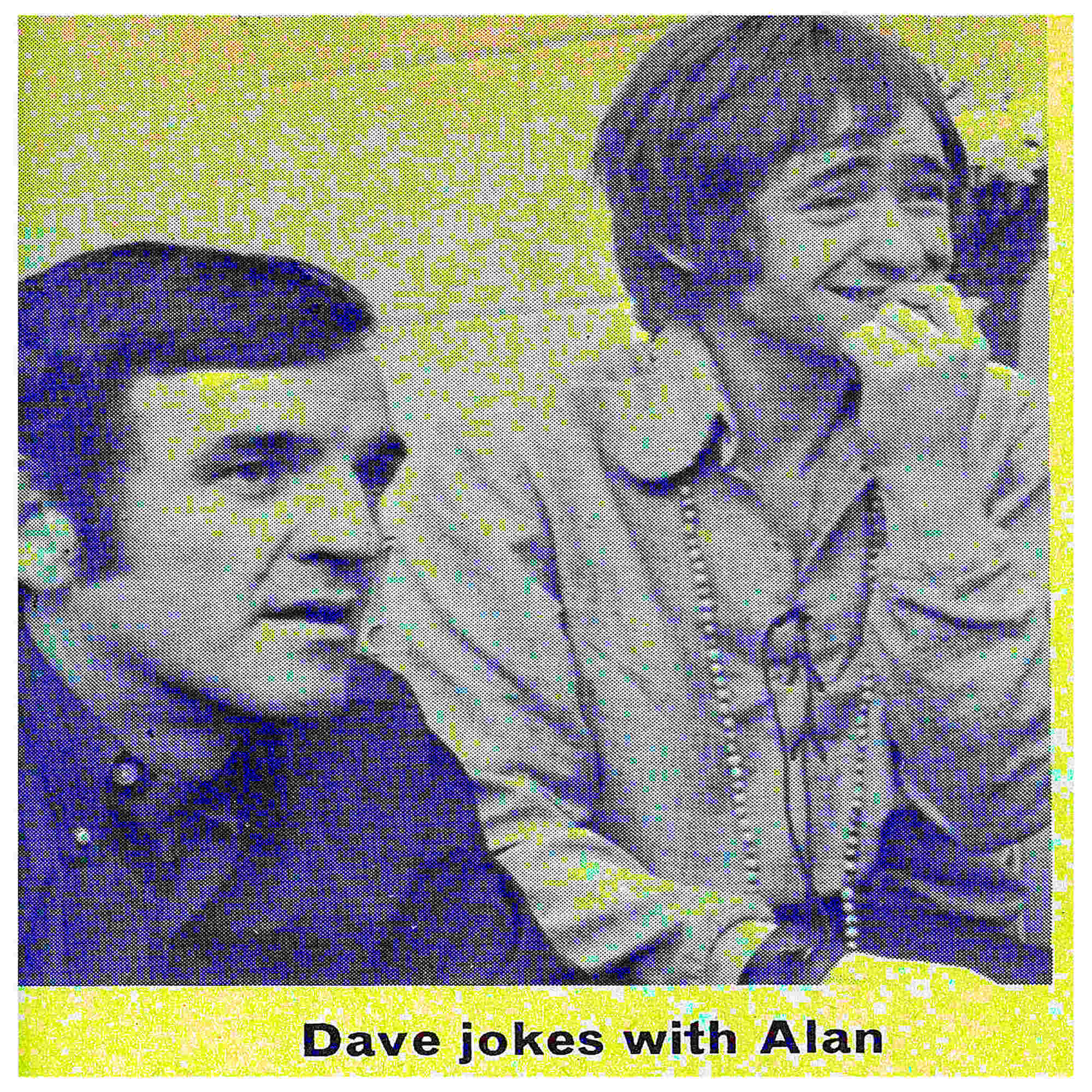
Alan Freeman in an exclusive RAVE Heart-to-Heart interview
Traffic: From ‘Paper Sun’ Success to Musical Evolution | Stevie Winwood’s new group Traffic is on the move—fast. And with the fantastic success of “Paper Sun” behind them, there’s only one way they’re intent on going—up! Here they talk about the musical route they’re taking.
One commodity there’s plenty of around my neighbourhood is traffic. Most of it seems to head for the country. Looking down at it from my apartment window, traffic is made up of a lot of odd and marvellous things . . . little men in huge cars . . . kookie birds in hot Minis the same colour as their dresses . . . school buses with kids giggling at the passers-by . . . big trucks rumbling, little milk-floats whirring.
And early in the morning, when I get up with the sun to work on a script out on the roof garden, traffic is just the yawning crew of a police car rolling back for its breakfast, or a busman on a bicycle pedalling down to his garage to take out the first Number Sixteen of the day.
Like the newspaper ads. say, all human life is there. So when a group calls itself Traffic, it suggests that it’s part of a great, busy, ever-moving stream of activity.
When Stevie Winwood and his three mates finally appeared on the top floor, they’d been active all right—because workmen had torn out the old lifts and hadn’t put the new ones in yet! After all those stairs, the boys flopped down looking like an Everest expedition that had just made the summit but were too blown to plant the Union Jack.

A Changed Stevie
“So this is what they mean by high life,” grinned drummer James Capaldi. But a round of cool drinks soon revived them. And Stevie, in the way that my guests invariably do, sat down at the piano and started to play.
They were his own musical ideas, and as he tried them out they sounded quieter and deeper than the hard-belting numbers of the period before his split with Spencer Davis.
Stevie himself was a lot cooler and quieter too. It was a year or so since he and I had our last long chat up here. Then, following his final break with Spencer, he had vanished off the scene to his cottage hideaway deep in the Berkshire greenery, where he had spent more than two months writing, thinking and working out the completely new musical life that the formation of Traffic meant.
The first result of the rural experiment was “Paper Sun”, though the record is a sort of progress report on what they’ve been up to out there in the wildwood. The original idea was simply to withdraw from the entire pop world for the whole summer and sally forth in September with a new, tested and confident Traffic sound.
But with no audiences to check reactions and provide pointers as to whether the boys’ ideas were moving in a successful direction, the four found themselves forced to do a trial release.
Unpredictable
By the time they hit the road again this autumn, however, the group may well have forged a very different musical personality. So don’t be surprised if Traffic’s next disc is nothing like what you had been led to expect by “Paper Sun”.
Like its counterpart in the city streets, Traffic took some time to form up. Jim Capaldi, guitarist, sitar man Dave Mason, and Chris Wood, the thoughtful flute player, knew Stevie more than two years back at the Elbow Room club in Birmingham.
“Mentally, we’ve been together about eighteen months,” Jim said. “In actual practice, about five.”
Chris said, “We all knew it was going to happen. We were in different situations, playing with various groups. But we were all waiting for the day when we could get together.”
Stevie picked his words carefully, even uncomfortably, as he tried to express the inevitability of the break with Spencer, without belittling their former relationship.
“For me there was a lot of frustration on both sides,” he said. “I couldn’t stand the showbiz aspect of working with Spencer. He seemed to enjoy it, but I hated it. At the same time, the four of us here had only been able to get together to play on about two occasions. But that was enough. We just knew it’d be good.”

“Terrible Vibrations”
It was the energy-sapping, mind-blotting strain of the tours, the stale, repetitive rhythm of life on the road that gave Stevie what he calls “terrible vibrations”. There was little time for thinking, and even less for the calm concentration he needs to turn an elusive, wispy idea into a professional, well-shaped composition.
“I don’t deny that I learned a lot with Spencer,” he said. “But I was getting musically frustrated too. I didn’t seem able to communicate any of my musical ideas. And, looking back now, I suppose there was a bit of a personality clash between us as well.
“It must have been obvious to Spencer a few weeks before we parted company what was going to happen. He knew that the boys and I were spending more time together, talking, planning, going around in each other’s cars, than I was spending with the Davis group.
“About the end of March I realised I was just plodding along. And I thought, ‘If you’re going to do it, then do it’. So Spencer and I finally broke up on April 1st.”
Traffic: From ‘Paper Sun’ Success to Musical Evolution
It was an unfortunate date, but it didn’t occur to anyone at the time that there was any significance in it. Having an exclusive recording contract for the group, Spencer was now in a rough situation, because until the contract was sorted out he wouldn’t be able to release further discs.
But he was soon planning a new scene, including performances at London’s Marquee Club, while Stevie and the others isolated themselves in the cottage to work on “music for everybody to dig”.
In a way, I suppose, it was like the embarrassment and awkwardness of breaking off a long affair when you know your life is destined to lie along another path. In which case, as the wise know, the best thing is to finish completely with the past and take off to wholly fresh pastures.
“Since we went down there,” Stevie said, “we’ve been asked what kind of definite objectives we’ve set ourselves. I don’t really feel we’re trying to be all that different from other groups, except in our thinking.
“I don’t like that word ‘ambition’ too much. l only have it in a loose sort of way. It’s nice if you have something definite to look forward to. But I’d say at the moment we have most of what we’d been looking forward to, which was just to work together.
If I have any ambition at all it’s more or less to keep this unity we’ve managed to get at last.

Traffic: From ‘Paper Sun’ Success to Musical Evolution | Wild Things
“We’ve got our direction now, and that makes me happier than I’ve been for a long, long time. But of course, it needn’t stop there. If a group’s swinging and really co-operating, both as people and musicians, we could wind up doing really wild things.”
I fixed another round of coolers for the boys and myself. Then I asked: “How much does the search for novelty in music affect Traffic’s ideas?”
Dave took over for a moment. “It’s not so much that we want to go for the new as wanting to hold that sense of wonderment about what really goes on in people’s lives, instead of accepting everything and taking it for granted.
“See, you could say that the countryside’s the oldest part of England. But it fills us with wonderment. We walk around down there at the cottage, digging everything and just flipping. It’s a marvellous feeling—until you meet someone who tells you that because you’ve reached the so-called adult stage you should know better.”
Dave and Chris, who met as art students at college, have the edge over people who haven’t been trained to use their eyes and look deep into things for the fascinating secrets of form and content that lie below the surface.
Different Music
“When something moves you, excites you,” said Jim, “you just want to knock yourself out. Then if other people dig it as well, that’s nice. And as long as you can continue to knock yourself out like that, you continue to be happy. When I can’t, I get depressed.”
Dave cut in again. “We wouldn’t want to get caught in the same trap as some groups that start off playing a certain style and then get stuck with it until it’s almost impossible for them to break away from it. What we want to do is to produce different pieces of music that are each separate in themselves, but are all just as strong as each other. That way you can always be striving for new things without turning it into a gimmick or a drag.
“Like Jim and I went to see that guitarist, Manitas de Plata, at the Albert Hall. Wow! The music he’s playing might be flamenco that’s hundreds of years old, but the individual style he gives it—well, you couldn’t imagine anything newer or more different.”
Traffic: From ‘Paper Sun’ Success to Musical Evolution
“He makes it so natural,” Stevie said.
“And humorous,” Jim added. “There’s a ridiculous amount of humour in his playing, and that makes it a new kind of experience too. He’s just having a great time. Knocking himself out, like we want to. And then the audience catches it and everyone winds up having a ball.”
“Yeah, that’s what it’s all about,” Dave proclaimed. “In a way, you’ve got to put the pressures on yourself. If you’ve got producers and the record public trying to make you come up with some new kind of stunt every six weeks, it’s no good. You might as well face it—if you play along with those kind of pressures you’re just trying to catch the market, and it cheapens everything you’re really hoping to do.
“It’s got to come from inside yourself. You have to have a kind of inner discipline that makes you want to go on and on being better each time. It’s no good setting out to be new unless you’re striving to be better as well.”
Jim nodded in agreement. “That’s the greatest bring-down of all, when we listen to a record we’ve done and it isn’t what we’d hoped for.”
“The trouble is,” said Stevie, “that when a group does get something really new and worthwhile, everyone’s on to it like a shot, copying. And naturally the public soon gets bored. Which is why you seem to get this feeling that groups are expected—pressured, if you like—to provide a whole new musical scene every six weeks or so.”
Chris, who had been listening silently, took a reflective sip from his glass and said, “l think what we’re really talking about is the difference between fashion and a genuine new form. It’s the business side of pop that tends to get caught up with fashion.”

Traffic: From ‘Paper Sun’ Success to Musical Evolution | Fantastic Scene
“It’s this generation’s own fault,” Dave accused. “There’s a whole new fantastic revolutionary scene that could happen if only they would let it happen. But a lot of them can only follow what’s already been done, like as if there’s a kind of continual effort to stifle really new responses between people.
If they could only realise that it isn’t a question of ‘I’m saying and you’re doing’. If they’d stop following fashions and trust their own responses, depend on their own personal disciplines like we have to, they’d really be getting close to the kind of scene they could all enjoy.
“But instead you get fashion-versus-genuine newness happening on every level. Say, for example, a London group starts up and they suddenly get a fantastic band of followers. Everybody’s going around raving about them. As soon as they get a hit record . . .ha, ha. You want to see what happens to the faithful followers. All you hear is that they’ve sold out, gone commercial and all that bit.”
I said, “It’s a very sad state of affairs, gentlemen. Let me offer you another shot of consolation.”
Jim said, laughing, “You can console me with a brandy and Coke, Alan. And if you really want to bring me up again, nothing works better than a bag of crisps.”
I got out the box and gave them a bag each. Traffic made history in that moment by revealing itself as the only group that resorts to crisps as an anti-depressant! And what’s more, they seemed to do the trick.
By the time the boys got to the bottom of the bags, they were talking about love-ins and Stevie was warming up the piano for a bout of rock ‘n’ roll.
I reckon by now I’ve pretty well lost count of the times I’ve sat down here with the top groups and singers, and probed for the particular bond that holds a musical team together as it climbs towards the success barrier and finally breaks through to fame. The reasons have varied as much as the faces and styles.
Changed Groups
But the secret that’s always there, every time, is determination. Knowing what you want musically. I’ve seen a lot of stars come and go since I spun my first disc over the air. And one thing that’s changed is this: groups aren’t puppets on a string any more, to be manipulated into whatever form and image their managers demand.
Sure, you can point to the Monkees. But that was a candid, big-business venture from the start, as the boys themselves will be the first to admit.
At last, pop is coming of age and rising to equality with formal music. Because more and more, what brings and holds four boys like Traffic together is the same force that cements the historic orchestras of the world: an obsession with music itself.
Whatever happens to Stevie Winwood and his mates, one consideration is not likely to be pushed behind the commercial partitions, and that is the importance to them of what they write and perform.
When every group in British pop is as willing to wait, suffer frustration and throw away “safe” status to promote the music they believe in . . . well, then we’ll really be in sight of the genuine, individually free revolution that Dave Mason longs to see.
Me too.
Till next month… stay bright!


Leave a Reply