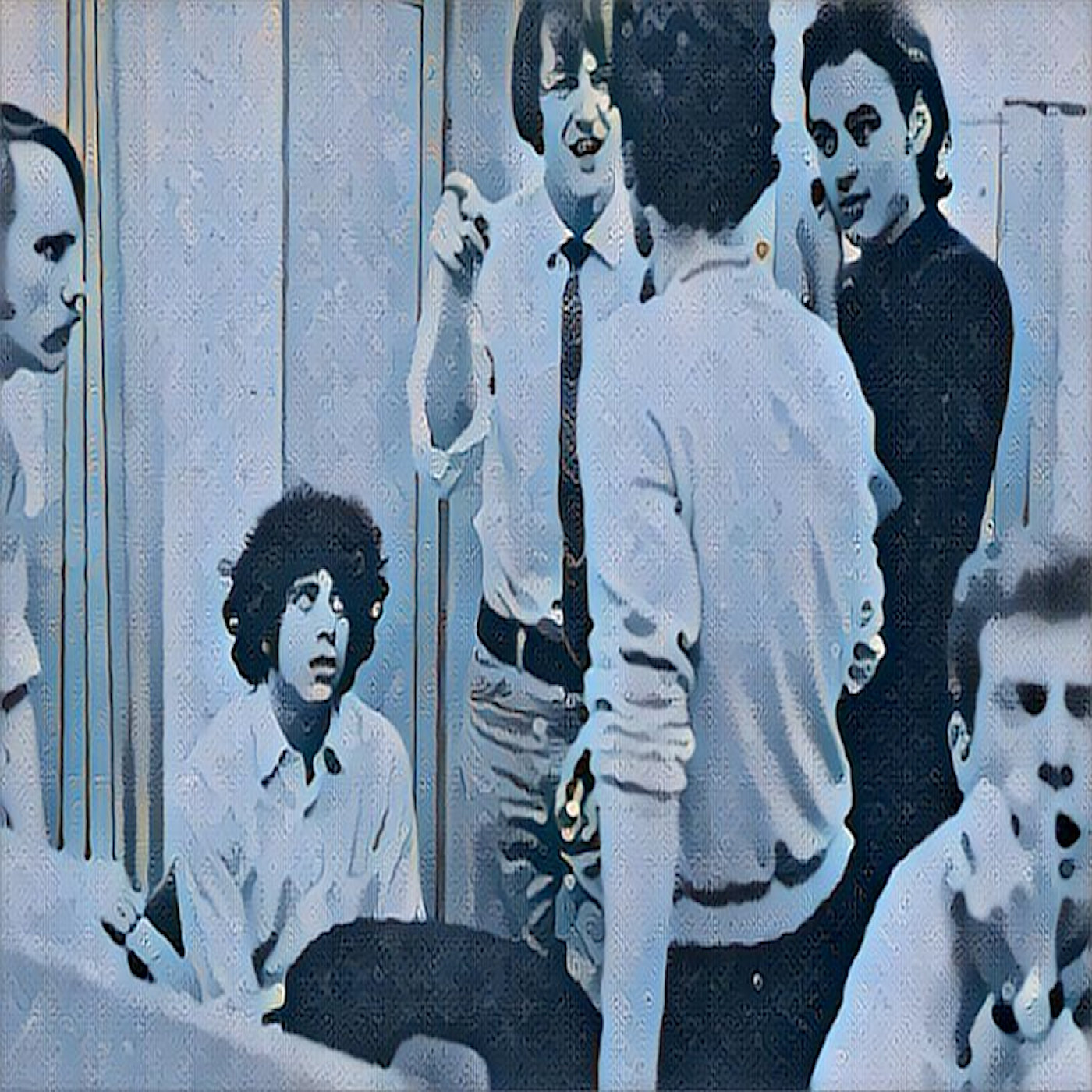
The Youngbloods in Song Hits magazine: March 1967
The Youngbloods, a new, young, singing-performing group. They, have an exciting record on RCA Victor, their first single, ‘Grizzly Bear” backed with ‘‘Tears”’.
To look at the Youngbloods, you’d never guess that four such different people could have much in common. To listen to them talk you’d wonder how four such distinct personalities could work closely together.
‘But to hear their music, you know that somehow, some once-in-a-lifetime chemistry has brought four contrasting individuals together, so that a whole new entity has emerged: The Youngbloods. Musically, they blend together perfectly. But each of these strong-minded young men remains unbendingly himself.
The Youngbloods: Rise to Fame and Success in 1967
There’s Jesse Colin Young, dark-haired and so romantically handsome that it might be a burden to anyone who didn’t have talent like Jesse’s to match his looks. Jesse sees his own talents clearly, and he’ll tell you honestly, if you ask him, just how good the Youngbloods are.

He loves making music and looks forward happily to large-scale success, but even if his future promised less than it does, Jesse would still be making the same kind of music, and loving every minute.
Jerry Corbitt insists that he’s out of touch with everything except his music. “Jerry lives in a dream,” agrees Jesse. “He ALWAYS leaves his harmonicas on-stage, and somebody ALWAYS takes them, and he comes back and says, ‘Hey, somebody took my harmonicas’ and he’s ALWAYS surprised.’’
But if Jerry is sometimes unaware of the world around him, it doesn’t work the other way. There is a magnetic quality about him that makes you notice him before he says a word or plays a note. He has the face of a pioneer or an explorer, with a rugged kind of gentleness. When he plays the guitar, it sometimes seems he must have twenty fingers on his right hand.
The Youngbloods: Rise to Fame and Success in 1967
For some reason, it’s Banana that the great mass of fans go for. Maybe it’s that black explosion of hair, or the wise, wicked little face peering out from under it. Or perhaps it’s his inability to hold any kind of serious conversation.

Talking with Banana is like wandering into a surrealist movie by mistake: if you ask him what he’s doing, he is likely to answer, “Twenty years.”
And finally there’s Joe, the oldest and the quietest, who looks like a riverboat gambler and plays his drums as if he had sold his soul to the devil. He doesn’t talk much – perhaps he doesn’t have to – but when he does, it is with a soft southern accent, polite and mysterious. Not even the other Youngbloods are quite certain what’s going on behind Joe’s calm blue eyes.
The group collected around Jesse, who plays fender bass and does some of the of the vocals. Jesse isn’t the leader-no-body is. But he was the nucleus.
As a moderately successful singer and song- writer in the folk idiom, he was building a career as a solo artist. ‘‘But I felt confined,”’ he recalls. ‘I always wanted to sing both ends, the tender pretty songs and the raw hard things, too. But I could never get enough out of one guitar to provide a foundation for everything I wanted. to do.”
How they met
Jesse was performing solo in a Boston coffeehouse one night when a lean young man with a long mane of hair strode in. It was Jerry Corbitt, whose own singing, songwriting, and wizardry with the guitar were beginning to attract attention.
Pretty soon Jerry was backing Jesse with guitar runs and ragtime licks and bluesy breaks on the harmonica, and before long they were singing together. Neither realized it, but in each of their minds an idea was beginning to take shape.

The idea of the Youngbloods neared reality when they acquired Joe. Jerry tells it this way: “This little short-haired character from Memphis had just come to Boston looking for work. We told him we were thinking about starting a band. He was hungry and we were hungry and that’s how we got Joe.”
But Joe was a jazz drummer, while the group was developing its own original variety on rock and roll, and Joe had to practically re-learn to play. ‘He could play beautiful jazz, but at first he couldn’t play R & R,” says Jerry. “He sure learned good.”
The group was completed with the arrival of Banana, whose own musical career had begun with bluegrass banjo, of all things. As a guitarist and vocalist, he had led his own rock groups, but with Jesse and Jerry and Joe he took up an entirely new instrument, electric piano.
For six months they worked together, earning a few dollars here and there, writing new material, and experimenting constantly. It came as a surprise when they realized that their experiments were succeeding.
One of the first to realize it was Herbert S. Gart, who had been Jesse’s personal manager. Encouraging, goading, criticizing, and kidding them, he helped the Youngbloods find themselves as a group. When they had started to achieve their musical identity, Gart presented them to executives at RCA.
RCA sign them
It was a bold step, but Gart was certain that in the Youngbloods he had a group certain to go straight to the top. RCA agreed, signed them to a contract, and the Youngbloods set about recording.
With some groups, the gruelling months that followed might have meant an unbearable strain. But by that time, says Jerry,“I found I was interested in the band as a whole, not just in my own part.
We all suddenly realized that we’d been dedicating every waking moment to this thing for nearly a year – and it WORKS!” ’And Jesse adds proudly, ‘Everybody gets along better together than they ever did before, because they know they’re doing good.”
The Youngbloods stand on the brink of fame and great success. They are aware of the hard work ‘that lies ahead, and resigned to the demands their fans will inevitably make. Their attitude is summed up in their answer to the reporter who asked, ‘Are you ready for stardom?” The Youngbloods’ reply: ‘We’re not ready for anything else!’’


Any questions about my content please get in touch via the contact form.




Leave a Reply